
Last updated November 2, 2026
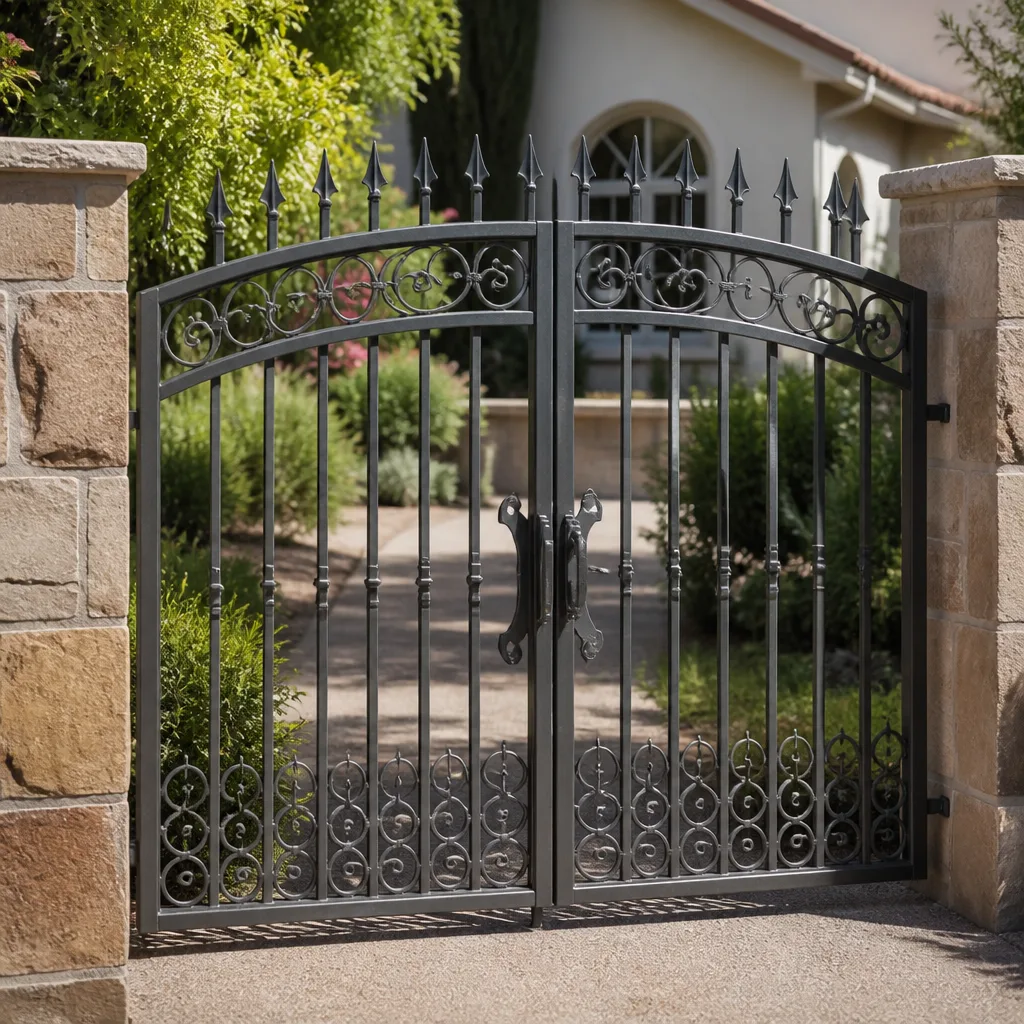 Wrought iron
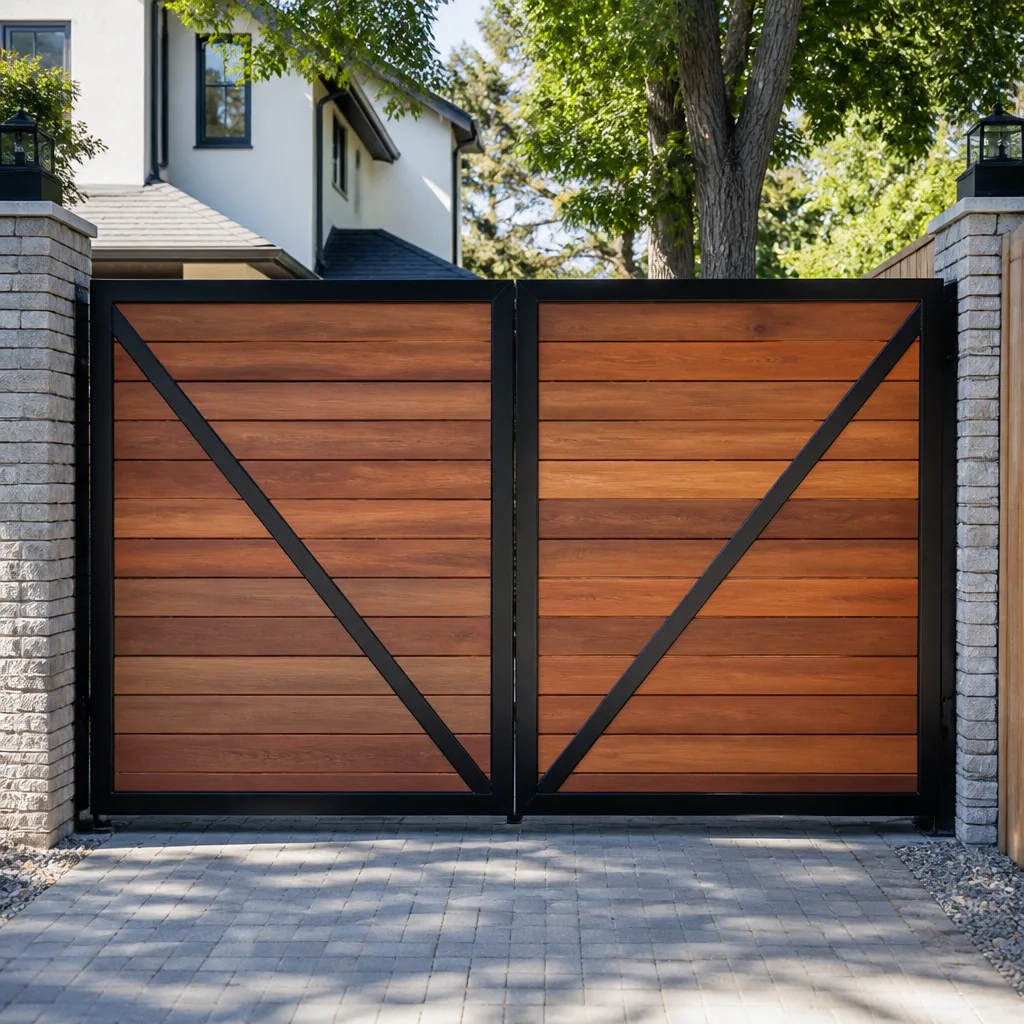 Wood & steel frame
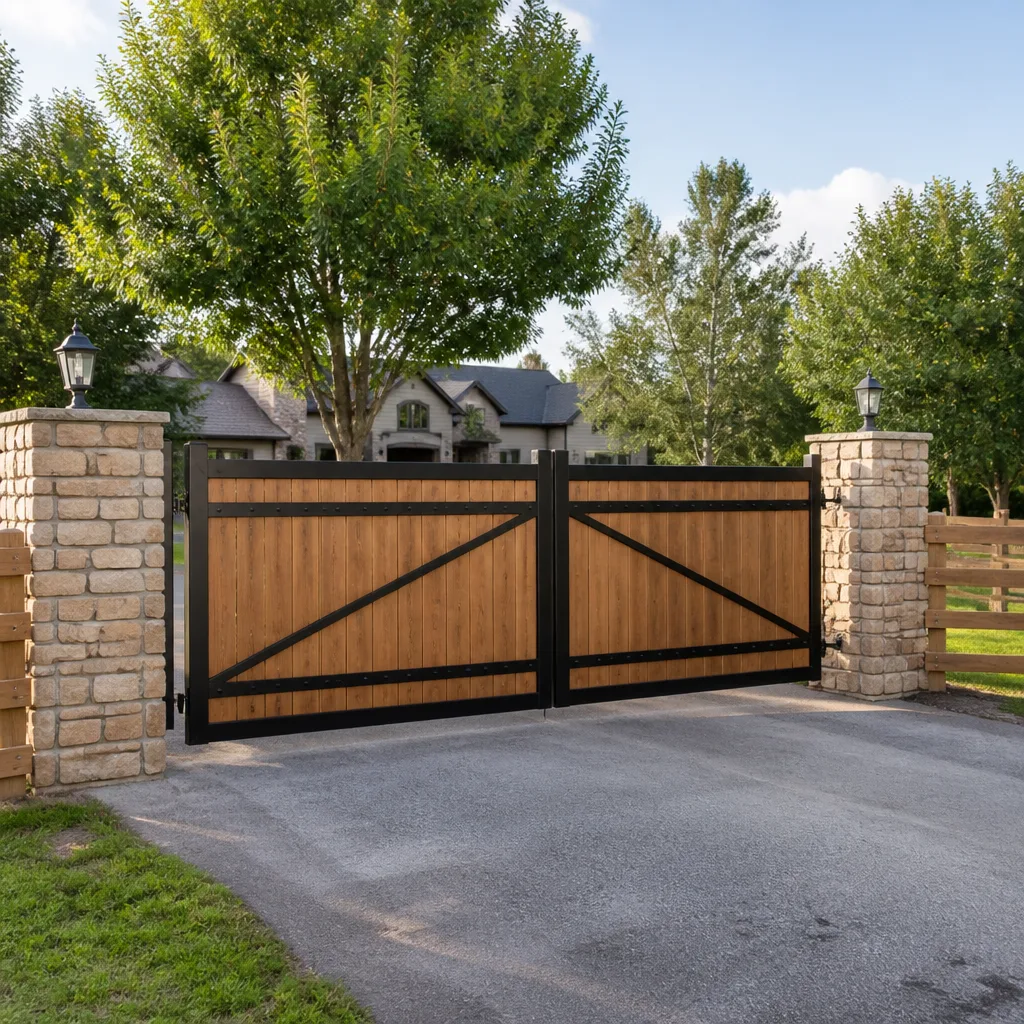 Farm & ranch
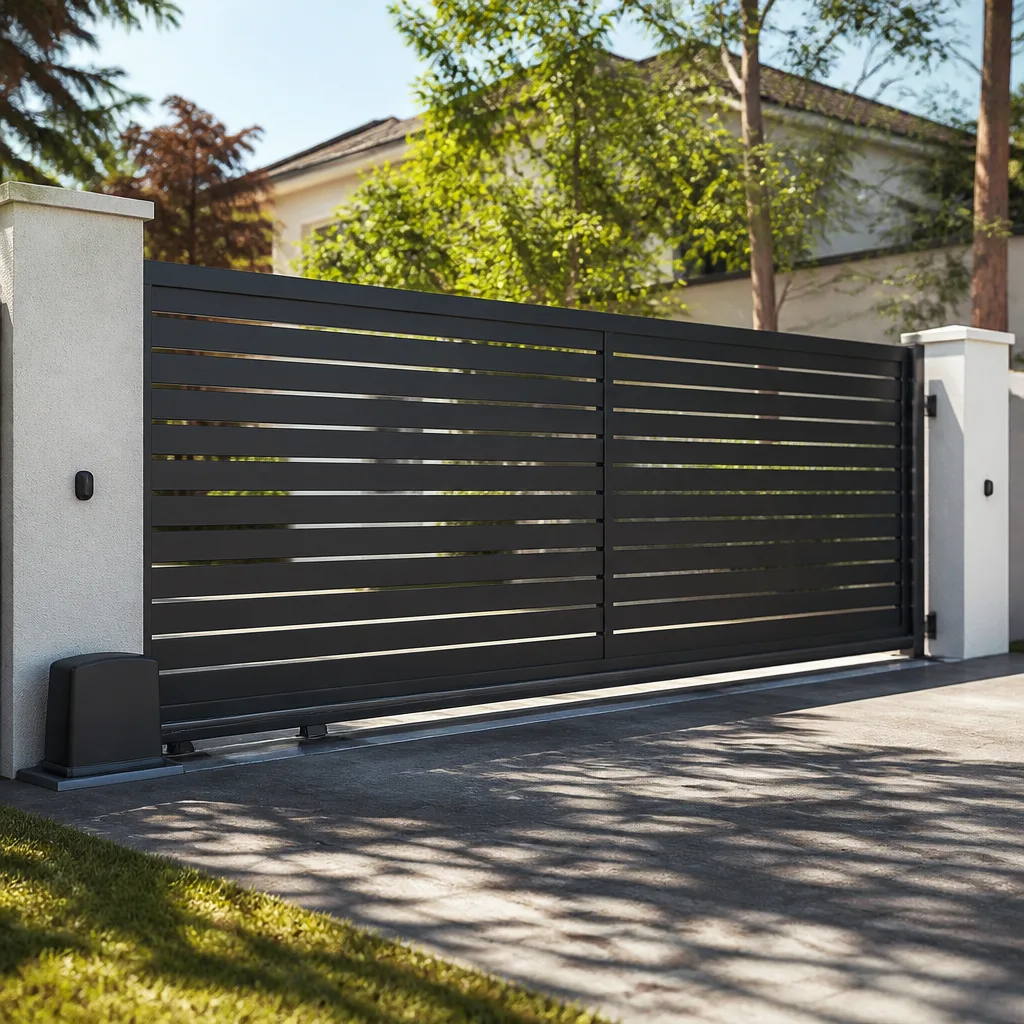 Sliding driveway gates
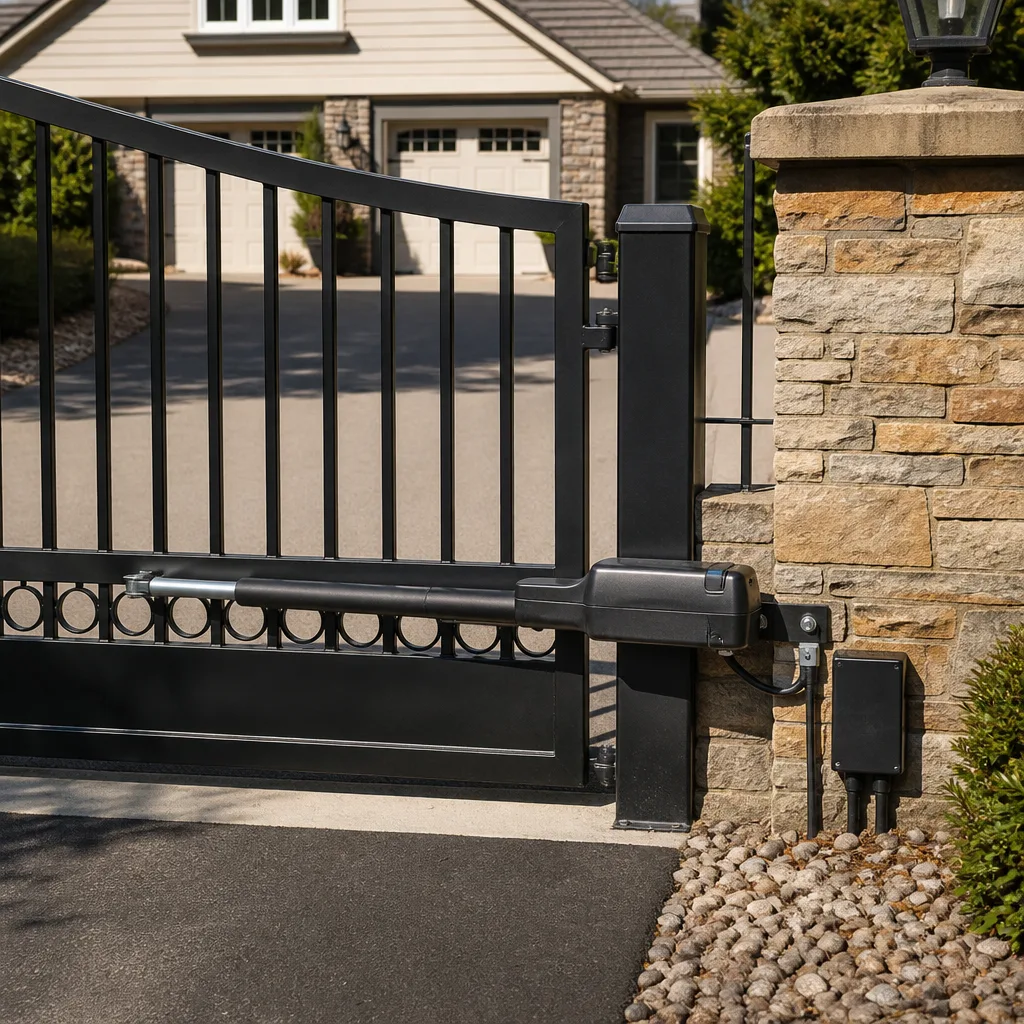 LiftMaster operators
Free on-site gate assessment - hinges, posts, and your LiftMaster or Nice gate operator checked before anything is quoted
The assessment is free and the quote is the invoice.
Get your free estimateDIY vs Professional Gate Repair: The Lake View Terrace Homeowner’s Decision Guide
Every year, homeowners in Lake View Terrace spend serious money repairing gate damage caused by well-intentioned DIY attempts that went sideways. We’re not talking about a stripped screw or a bent hinge pin. We’re talking about gate operators burned out by incorrectly wired control boards, safety sensors bypassed because they kept false-triggering, and slide gates that jumped their tracks and crushed a fence post. The real question isn’t whether you can turn a wrench. It’s whether the specific repair on your specific gate falls into the small category of tasks where a mistake only costs you time, or the much larger category where a mistake costs you money, your warranty, or your legal protection if someone gets hurt. This guide draws that line precisely.
Styles & brands we work with
- Wrought iron
- Wood & steel frame
- Farm & ranch
- Sliding driveway gates
- LiftMaster operators
Quick Answer
Most gate repairs in Lake View Terrace are not safe DIY projects. Roughly 30% of gate maintenance tasks, like lubrication, battery replacement, and basic remote reprogramming, are genuinely doable for a careful homeowner. The other 70%, including anything involving wiring, motors, control boards, safety sensors, or structural components, carries injury risk, code compliance consequences, or warranty invalidation. If your repair involves electricity, tension, or safety systems, call a gate repair specialist before you touch it.
Table of Contents
- The Tools Divide: When the Specialty Tool Costs More Than the Repair
- The Task-by-Task Matrix: What’s DIY-Safe and What’s Not
- The Warranty Voiding Risk: Which Brands Require Certified Work
- UL 325 and Liability: When a Gate Becomes a Legal Problem
- Lake View Terrace Climate: How Heat, Dust, and Wind Age Your Gate
- The Middle Path: How to Assist a Technician Without Getting in the Way
- Common Mistakes to Avoid
- When to Call a Professional
- Frequently Asked Questions
- The Bottom Line
The Tools Divide: When the Specialty Tool Costs More Than the Repair
Here’s the uncomfortable math most DIY guides skip. A gate repair isn’t just about skill. It’s about whether you already own the equipment to do the job correctly, or whether buying that equipment makes the repair more expensive than hiring a professional in the first place.
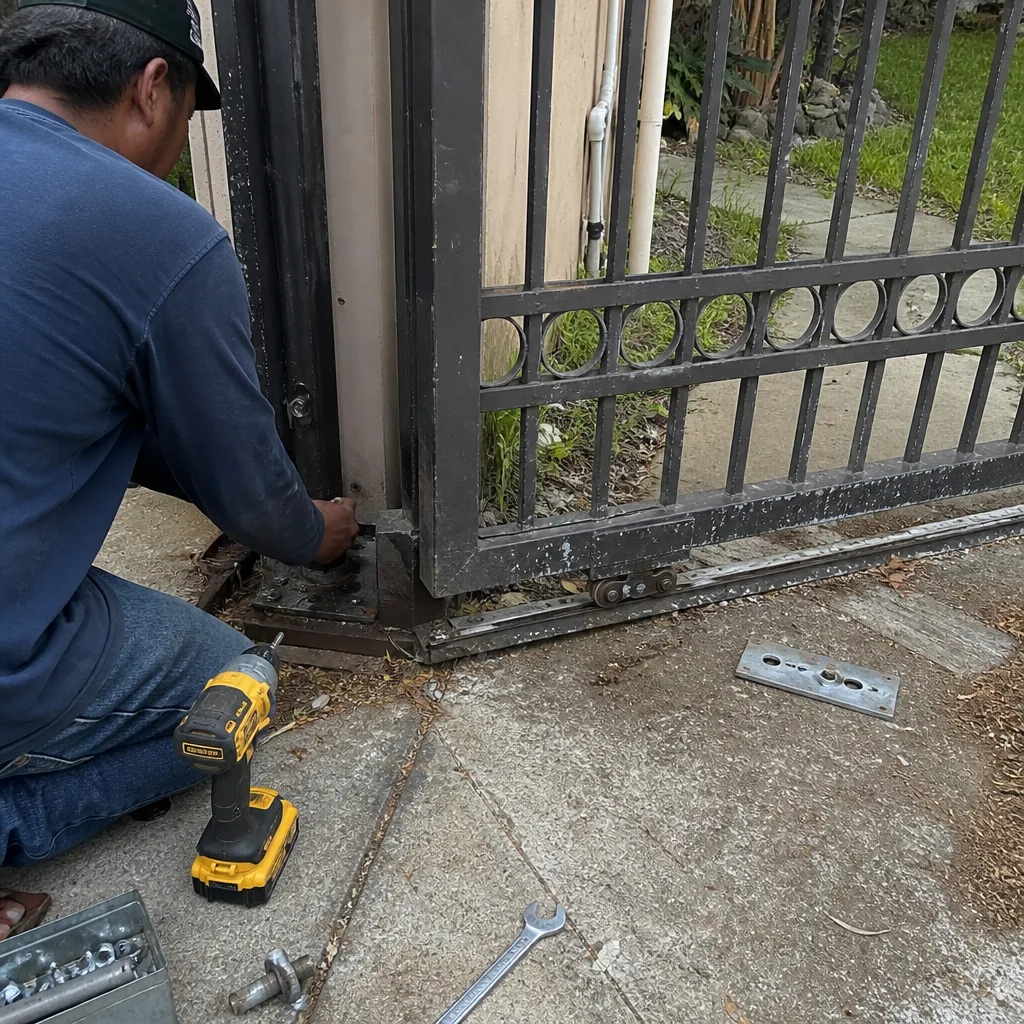
Take a basic slide gate that’s grinding on its track. A homeowner can see the problem: the V-wheels are worn. Replacement wheels for a Viking or FAAC slide gate run $35 to $80 per wheel, depending on the model. That part is cheap. But to replace them properly, you need to lift the gate leaf off the track. A 14-foot steel gate weighs 400 to 700 pounds. You need a gate jack or a floor jack with a proper saddle, plus jack stands rated for the load. If you don’t own those, you’re spending another $200 to $400 on lifting equipment before you touch a single bolt. And you still need to realign the track, set the wheel spacing, and adjust the guide rollers so the gate doesn’t wobble at full travel.
Now compare that to a service call from a gate specialist who arrives with the jacks, the stands, the replacement wheels, and the experience to have the gate running smoothly the same day. That’s not a convenience argument. It’s a pure cost argument. We’ve seen homeowners in Lake View Terrace buy specialty tools for a one-time repair, finish the job, and then store those tools in the garage for five years, never touching them again.
The same logic applies to loop detector testing, which requires a specialized meter; to control board diagnostics, which require reading wiring diagrams specific to each brand; and to spring tension adjustments on cantilever gates, which require knowing the gate’s weight and geometry before touching a single bolt. If a tool costs more than a service call, the DIY project isn’t saving money. It’s subsidizing the tool industry.
The Task-by-Task Matrix: What’s DIY-Safe and What’s Not
Let’s be specific. Here’s the actual breakdown of gate maintenance and repair tasks, organized by risk level. This isn’t a generic list. This is the list we use when a Lake View Terrace homeowner asks us whether they should attempt a repair themselves. For a deeper look at pricing, see our Gate Repair Cost Breakdown: The Lake View Terrace Homeowner’s Reference for 2026.
Genuinely DIY-Safe Tasks (Low Risk, Low Consequence)
- Lubricating hinges, rollers, and chains: If you can reach the moving parts without disassembling anything, a can of white lithium grease or silicone spray is perfectly safe. This is routine maintenance, not repair.
- Replacing remote control batteries: A dead remote is almost always a $3 battery. Slide the cover off, swap the coin cell, and test it. If it still doesn’t work, the problem is the receiver or the programming, not the battery.
- Reprogramming a remote: Most LiftMaster, Linear, and Mighty Mule remotes have simple learn-button procedures printed in the manual. If you have the manual and the operator beeps or clicks when you press the button, you can handle this yourself.
- Cleaning photo-eye sensors: Dust and spider webs in Lake View Terrace’s dry climate frequently block the beam and cause false obstruction readings. A soft cloth and glass cleaner fixes this in 30 seconds.
- Tightening visible bolts and fasteners: If a bolt is loose and accessible, tighten it. This is especially important on gate hinges and latch posts where vibration loosens hardware over time.
Not DIY-Safe Tasks (High Risk or High Consequence)
- Any wiring repair: Gate operators run on 110V or 220V line voltage plus low-voltage control circuits. An incorrect connection can fry the control board, start a fire, or create a shock hazard. This includes anything behind the operator cover.
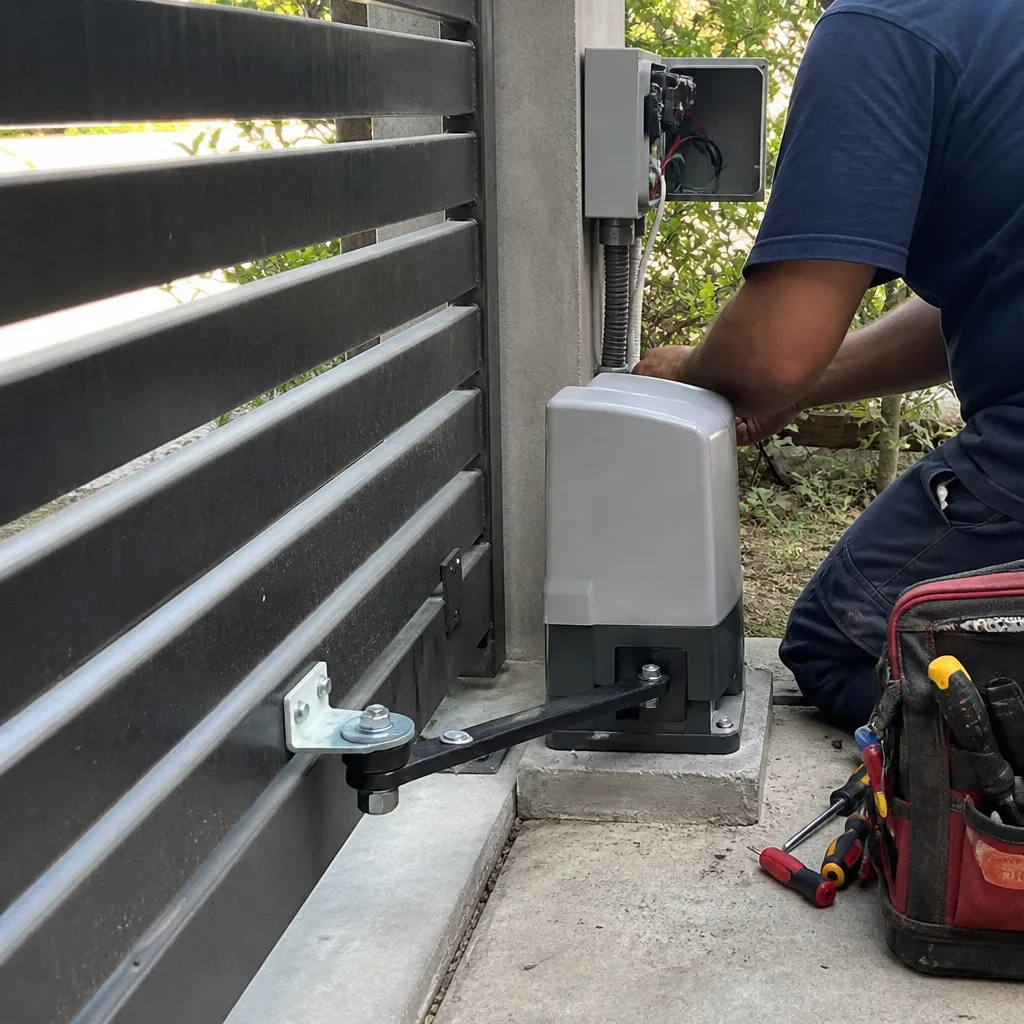
- Motor replacement: Gate motors are heavy, mounted under tension, and must be aligned precisely. A misaligned motor destroys its own gearbox within weeks.
- Safety sensor calibration: Photo eyes, safety edges, and loop detectors must communicate with the control board correctly. If the board doesn’t recognize the safety device, the gate may not reverse when it should. This is a UL 325 compliance issue, and it’s covered in detail below.
- Track and wheel replacement on slide gates: Covered above. The weight of the gate leaf makes this dangerous without proper lifting equipment.
- Spring or counterweight adjustment: Some gate designs use torsion springs or counterweights. These are under high tension and can release suddenly, causing severe injury.
- Any repair involving the gate operator’s internal electronics: Control boards, capacitors, transformers, and limit switches are not user-serviceable parts. A capacitor holds a charge even after power is disconnected.
We work on gate systems from FAAC, BFT, Linear, Viking, and five other major brands. Across all of them, the rule is the same: if you can see it and it’s mechanical, you might be able to handle it. If you need a multimeter, a wiring diagram, or a ladder to reach it, call a gate technician.
The Warranty Voiding Risk: Which Brands Require Certified Work
Here’s a fact that surprises most homeowners: your gate operator’s warranty is not unconditional. Read the fine print, and you’ll find language that voids coverage if the unit was installed or repaired by someone who isn’t qualified. The brands enforce this unevenly, but the risk is real.
FAAC and BFT, both major manufacturers of commercial and high-end residential operators, explicitly state in their warranty documentation that installation and service must be performed by authorized or certified technicians. If a FAAC operator fails within the warranty period and the manufacturer determines that an unqualified person opened the housing or altered the wiring, the warranty claim is denied. You’re paying for the replacement board, the motor, and the labor out of pocket. On a commercial-grade FAAC swing operator, that’s often a $1,200 to $2,500 repair.
Linear and Viking are slightly more lenient on basic mechanical issues, but both companies reserve the right to void coverage if they determine that improper installation or modification caused the failure. A homeowner who replaces a Linear control board themselves and then has the operator fail two months later will likely find that the warranty is void. The manufacturer can’t distinguish between installer error and a defective part, so they default to denial.
The practical takeaway is simple: if your gate operator is still under warranty, DIY repairs jeopardize that coverage. The money you save on labor gets dwarfed by the cost of a full-price replacement if the unit fails. A gate specialist who services your specific brand, whether it’s FAAC, BFT, Linear, Viking, or another make, can perform the repair without putting your warranty at risk.
UL 325 and Liability: When a Gate Becomes a Legal Problem
UL 325 is the safety standard that governs automated gate systems in the United States. It’s not a suggestion. It’s a mandatory standard that has been incorporated into building codes across the country, including every jurisdiction in Los Angeles County. And here’s the part most DIY guides never mention: UL 325 compliance is not just about avoiding a code violation. It’s about limiting your personal liability if someone gets hurt.
Automated gates are powerful machines. A typical residential slide gate operator can exert 1,000 pounds of force or more. When a gate closes on a person, a car, or a pet, the safety systems, meaning the photo eyes, the safety edges, the loop detectors, and the reverse mechanism, are supposed to stop and reverse the gate before it crushes anything. If those systems are not working, the gate becomes a slow-motion battering ram.
Here’s the scenario that plays out in courtrooms: a homeowner replaces a control board themselves. They wire it slightly wrong. The gate opens and closes, so the homeowner thinks the repair succeeded. But the safety reverse circuit isn’t communicating with the board. Two weeks later, a neighbor’s child is near the gate when it closes. The gate doesn’t reverse. The child is injured. The homeowner is sued, and the attorney for the injured party discovers that a non-professional performed the board replacement. The homeowner’s insurance company may deny coverage because the homeowner created the unsafe condition. The homeowner is now personally liable.
This is not a hypothetical. This is the exact reason UL 325 exists. The standard requires that safety devices be tested and verified after any service on a gate operator. A professional gate technician does this as a routine part of every repair. A homeowner who doesn’t know what UL 325 requires can’t test for compliance, because they don’t know what they don’t know.
If your repair touches the gate operator, the wiring, or any safety device, you’re not just risking a broken gate. You’re risking legal exposure that no amount of YouTube confidence will protect you from. This is where the DIY conversation should end and the phone call should begin.
Lake View Terrace Climate: How Heat, Dust, and Wind Age Your Gate
Lake View Terrace sits in the northeastern San Fernando Valley, where summer temperatures routinely pass 95 degrees and the Santa Ana winds blow through the foothills with enough force to strip paint and coat every surface in fine dust. This climate is not neutral to your gate. It accelerates wear in ways that homeowners in coastal areas never experience.
The heat is the biggest factor. Gate operator control boards are electronic devices, and electronics hate heat. A control board mounted inside a dark metal operator housing on a 100-degree Lake View Terrace afternoon can reach internal temperatures above 140 degrees. Capacitors dry out faster. Solder joints degrade. Limit switches drift out of calibration. This is why gate operators in the Valley fail more often than the same models in Santa Monica or Long Beach.
The dust is the second factor. The dry, dusty air infiltrates every opening in the operator housing, the track, and the hinge mechanisms. Dust combines with the grease on chains and lead screws to form a gritty paste that accelerates wear on every moving surface. Photo-eye sensors get coated with a fine film that reduces their range and causes false obstructions. This is not a one-time problem. It’s a continuous, seasonal condition that requires regular cleaning and lubrication.
The Santa Ana winds add a structural load that most gates weren’t designed to handle continuously. A solid-panel swing gate is essentially a giant sail. In a 50-mph wind gust, that gate applies enormous leverage to its hinges, its operator arm, and its mounting post. Gates in Lake View Terrace frequently develop hinge slop, cracked welds, and bent operator arms because of wind loading, not because of poor manufacturing.
This means a Lake View Terrace homeowner is more likely to face heat-related control board failures, dust-related sensor problems, and wind-related structural wear than a homeowner anywhere else in the region. The Gate Repair in Lake View Terrace landscape is shaped by these environmental factors, and they push more repairs into the professional category than most people expect.
The Middle Path: How to Assist a Technician Without Getting in the Way
Most DIY-vs-professional guides give you two options: do it yourself or hire someone and disappear. There’s a third path, and it’s the one that saves you the most money while still protecting your warranty, your safety, and your liability. You hire a professional for the dangerous work, and you assist with the safe, time-consuming tasks that would otherwise add billable hours to the invoice.
Here’s how to do this productively.
- Document the symptoms before the technician arrives. Write down what the gate does when it fails. Does it open but not close? Does it close but reverse immediately? Does it hum but not move? A clear symptom description lets the technician diagnose faster, and diagnosis time is billable time.
- Clear the path and the area around the gate. Move cars, trash bins, yard equipment, and anything else that blocks access to the gate operator, the track, or the hinges. If the technician has to spend 20 minutes moving your stuff, you’re paying for those 20 minutes.
- Locate the manual and any remote controls. Having the gate operator manual on hand saves the technician from looking up the model number and downloading the documentation to their phone. Every minute saved is money saved.
- Tell the technician what you’ve already tried. If you replaced the remote battery, clean the photo eyes, or tightened some bolts, say so. This information prevents the technician from re-testing something you’ve already ruled out.
- Stay available for questions, but stay out of the work zone. The technician may need to ask you about the gate’s history. Stay within earshot. But don’t stand behind the technician while they’re working with line voltage or lifting a heavy gate leaf. You’re not helping by being close. You’re adding risk.
This middle path works especially well for homeowners in Lake View Terrace who want to be hands-on but understand that the high-risk portions of gate repair belong in professional hands. It’s not about checking out of the process. It’s about contributing where you’re useful and staying clear where you’re not.
Common Mistakes to Avoid
- Bypassing a safety sensor that keeps false-triggering. When the photo eye keeps signaling an obstruction, the temptation is to disconnect it or cover it so the gate stops reversing. This is not a repair. This is removing a legally required safety system. If the gate then injures someone, you’ve created undeniable liability for yourself.
- Using spray lubricant on the control board. We’ve seen it. A homeowner opens the operator housing, sees dust or corrosion on the circuit board, and sprays it with WD-40. That board is now destroyed. Electronics require contact cleaner, and even then, the board should usually be replaced rather than cleaned.
- Replacing a spring without understanding the load. Gate springs are not garage door springs, but they’re still under lethal tension. If you don’t know the exact spring specification and the correct winding procedure, don’t touch it.
- Ignoring a grinding noise and hoping it goes away. A gate that grinds when it moves is telling you something specific: a bearing is failing, a wheel is worn, or the chain is out of alignment. Every week you ignore it adds wear to every component in the drive system. The repair gets more expensive the longer you wait.
- Buying a replacement part by price instead of compatibility. A cheap control board from an online marketplace might be designed for a different operator model or a different voltage spec. Installing it can fry your motor, or worse, leave the gate without functional safety circuits. If the part number doesn’t match exactly, don’t buy it.
- Attempting a 220V wiring repair without shutting off the breaker. Gate operators are frequently wired to a dedicated breaker. If you don’t kill the power at the panel, you’re working on live wires. Two seconds of carelessness is a hospital visit or worse. There’s no second chance on this one.
When to Call a Professional
Call a gate specialist when the repair involves anything behind the operator housing, any wiring, any safety device, any motor or gearbox, any structural component under load, or any task that requires lifting the gate leaf. Call a professional if your gate is still under warranty and you want to keep it that way. Call a professional if you’ve already attempted a repair and the problem got worse. And call a professional if you simply don’t want to spend a Saturday wrestling with a 500-pound steel gate while the Santa Ana winds whip dust into your eyes. Electric Gate Repair in Lake View Terrace is a distinct technical discipline, covering motors, control boards, loop detector calibration, and safety hardware. Gate Repair Lake View Terrace offers free estimates in Lake View Terrace. Call (833) 696-4511 to schedule one.
Frequently Asked Questions
Gate repair in Lake View Terrace typically ranges from $150 to $600 depending on the component and the complexity of the job. A photo-eye sensor replacement usually runs $150 to $250 including the part. A control board replacement for a residential operator typically runs $350 to $550. A full motor replacement on a slide gate can run $600 to $1,200. These are labor-inclusive ranges for the local market, and the exact quote depends on your specific operator brand and access conditions. Call (833) 696-4511 for a free estimate on your specific gate.
We schedule emergency gate repairs in Lake View Terrace as quickly as our technician availability allows. A gate that won’t close is a security problem, especially in a neighborhood with large lots and valuable vehicles. Call (833) 696-4511 and we’ll give you the next available appointment time for your specific situation.
We service gate operators from nine major brands including FAAC, BFT, Linear, Viking, LiftMaster, Ghost Controls, DoorKing, Elite, and Mighty Mule. This multi-brand range means you rarely need a second call to a different technician when the first one can’t identify your hardware. If you have an unusual or discontinued operator, call us at (833) 696-4511 and we’ll tell you whether we can source parts for it.
Yes. Replacing a remote battery is completely safe and takes under a minute. If the gate still doesn’t respond after a battery replacement, the issue is in the receiver or the control board, and those are not things you should attempt to repair yourself. The next step is a diagnostic call to a gate specialist.
A full Gate Installation in Lake View Terrace includes site evaluation, concrete pad or post setting for the operator, mounting and wiring of the operator, connection of safety devices including photo eyes and edges, loop detector installation if required, and full testing and user instruction. We also handle operator installation for existing manual gates that you want to automate. The quote includes everything, and the price is agreed before any work starts.
Most automated gate operators include a manual release mechanism that disengages the motor and allows the gate to be pushed by hand. The release is typically a lever or key-operated mechanism on the operator housing. If the gate won’t move manually after disengaging the release, the problem is mechanical, not electrical, and it may be a wheel, track, or hinge failure rather than a motor problem. In our experience, homeowners in Lake View Terrace frequently confuse these two failure modes.
The Bottom Line
The DIY-vs-professional decision for gate repair comes down to three questions: does this task risk personal injury, does it risk legal liability, and does it risk voiding my warranty. If the answer to any of those is yes, the repair belongs in professional hands. For Lake View Terrace homeowners specifically, the heat, dust, and wind of the San Fernando Valley accelerate gate wear and push more repairs into the complex category than homeowners in milder climates face. Lubricate, clean, replace batteries, and reprogram remotes yourself. For more guides & resources, visit our blog. Leave the wiring, the motors, the safety systems, and the structural work to a gate specialist who works on your brand, whether that’s FAAC, BFT, Linear, Viking, or another make. When that line gets crossed, call (833) 696-4511.
Written by the team at Gate Repair Lake View Terrace, serving Lake View Terrace since 2012. We work on gate systems from Gate Repair Lake View Terrace home, covering electric gate repair and gate installation across the neighborhood.
See the difference
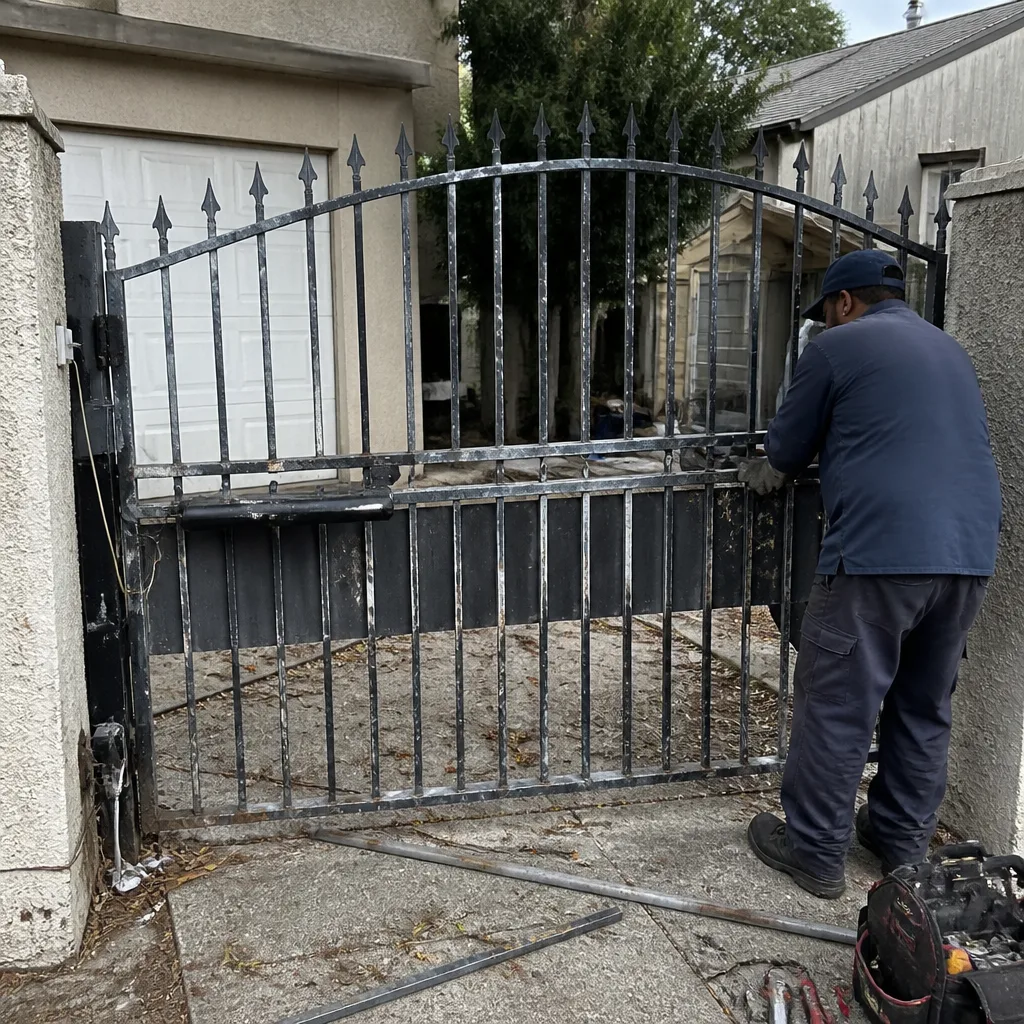 Before
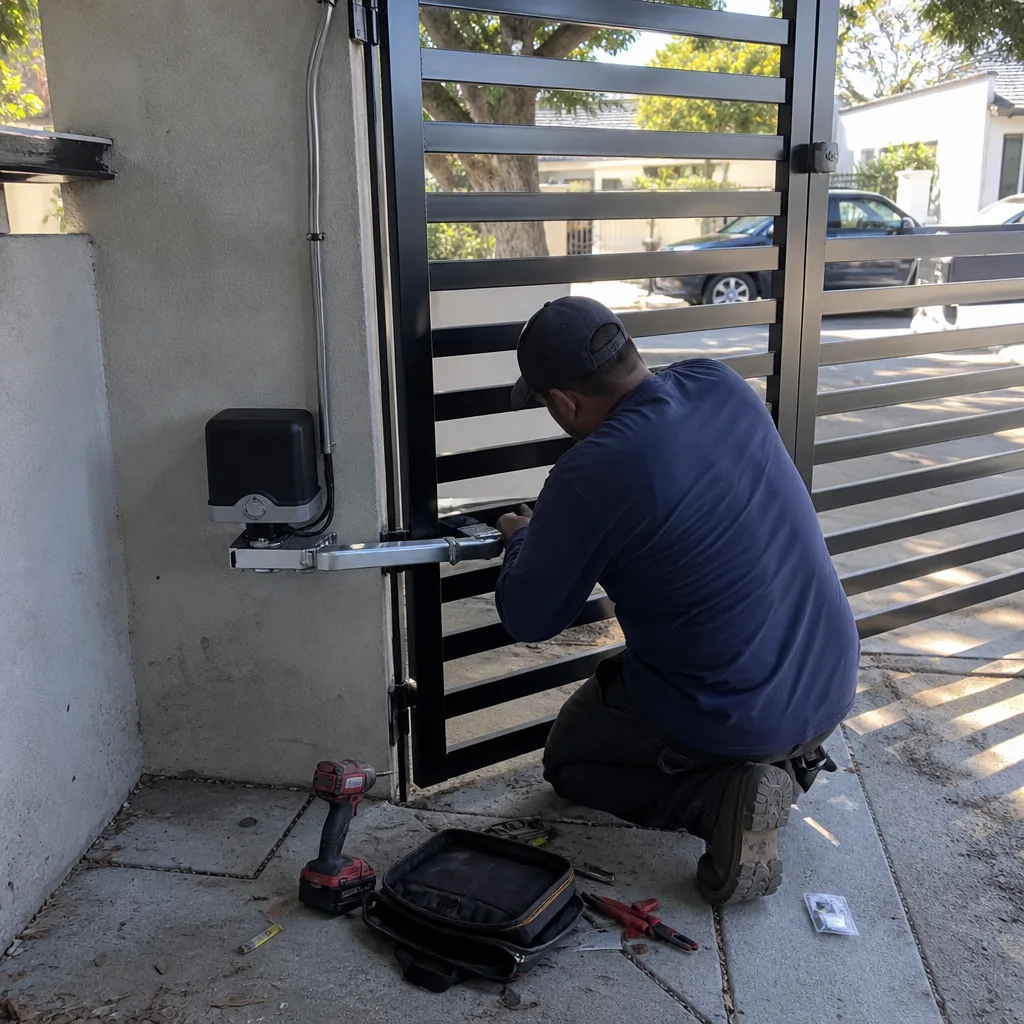 After
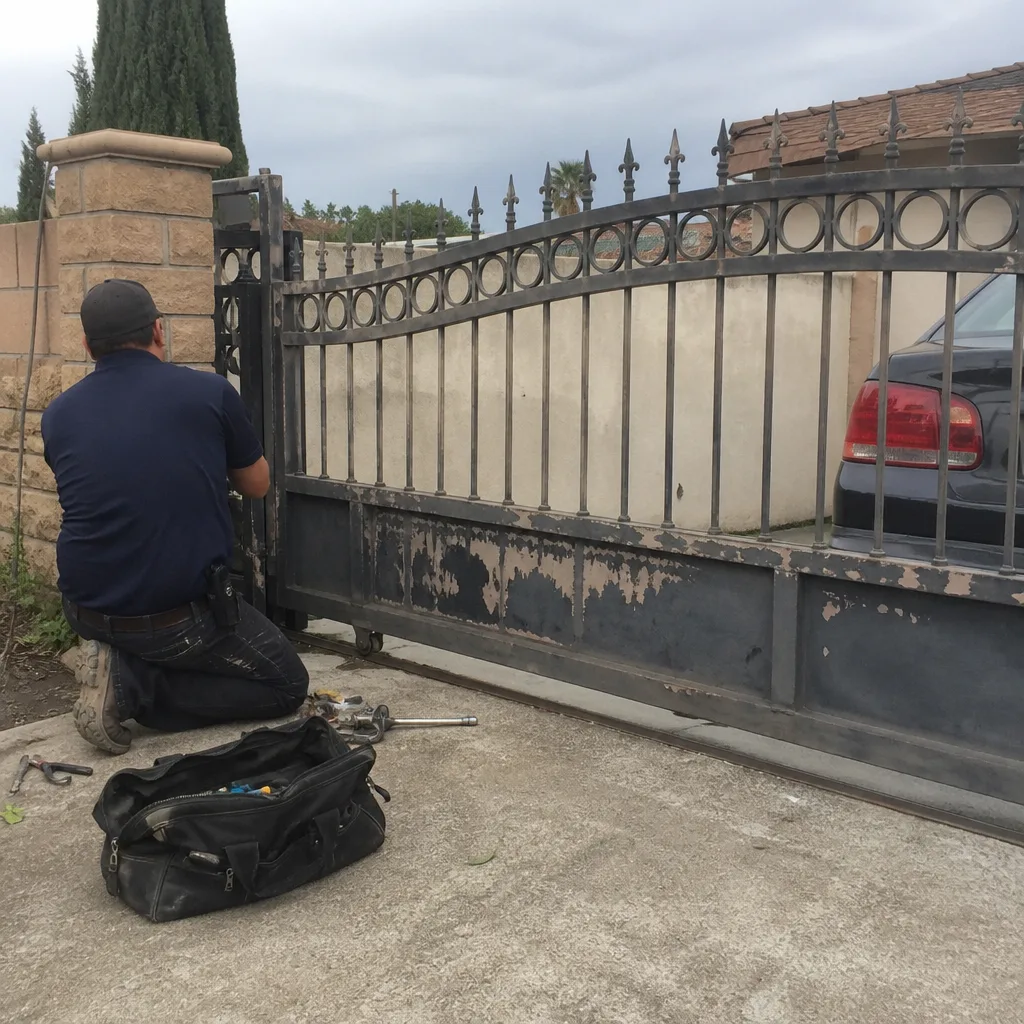 Before
 After
 Before
 After