
Last updated November 2, 2026
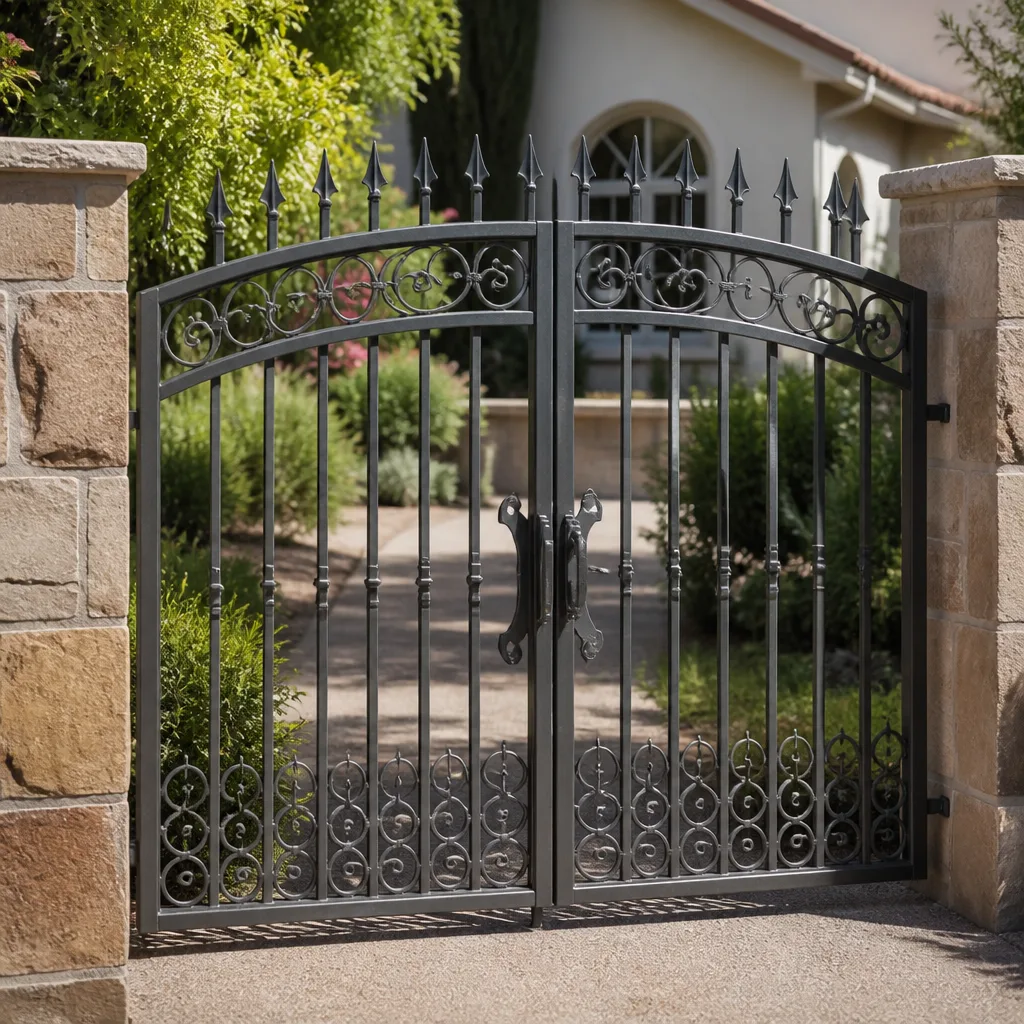 Wrought iron
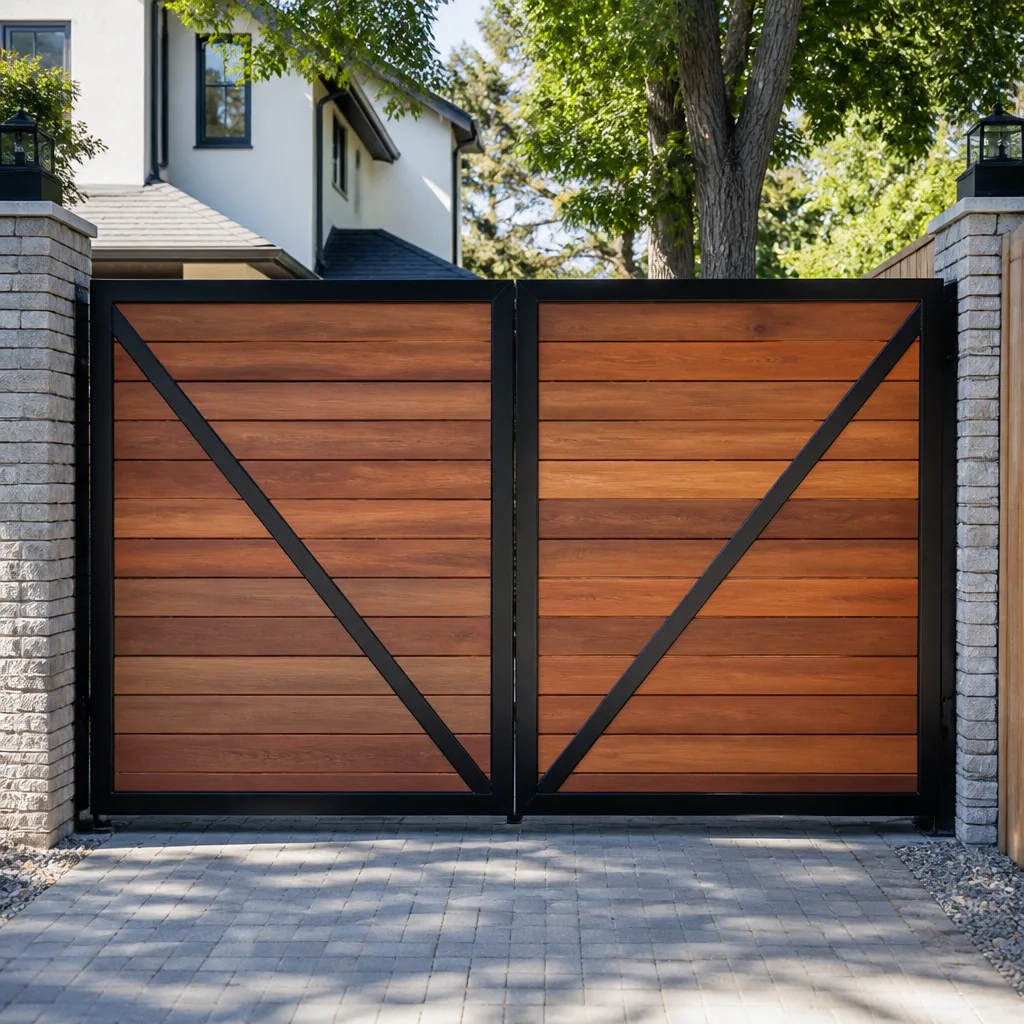 Wood & steel frame
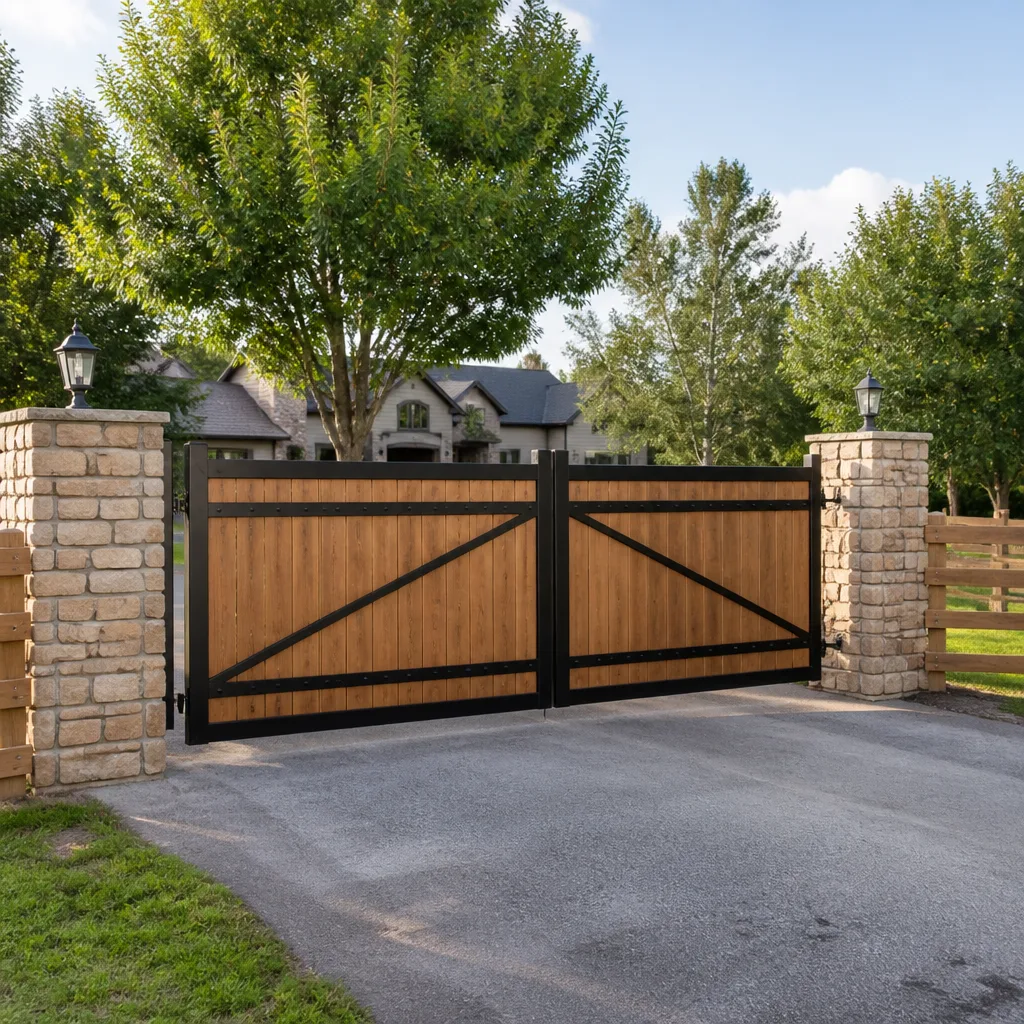 Farm & ranch
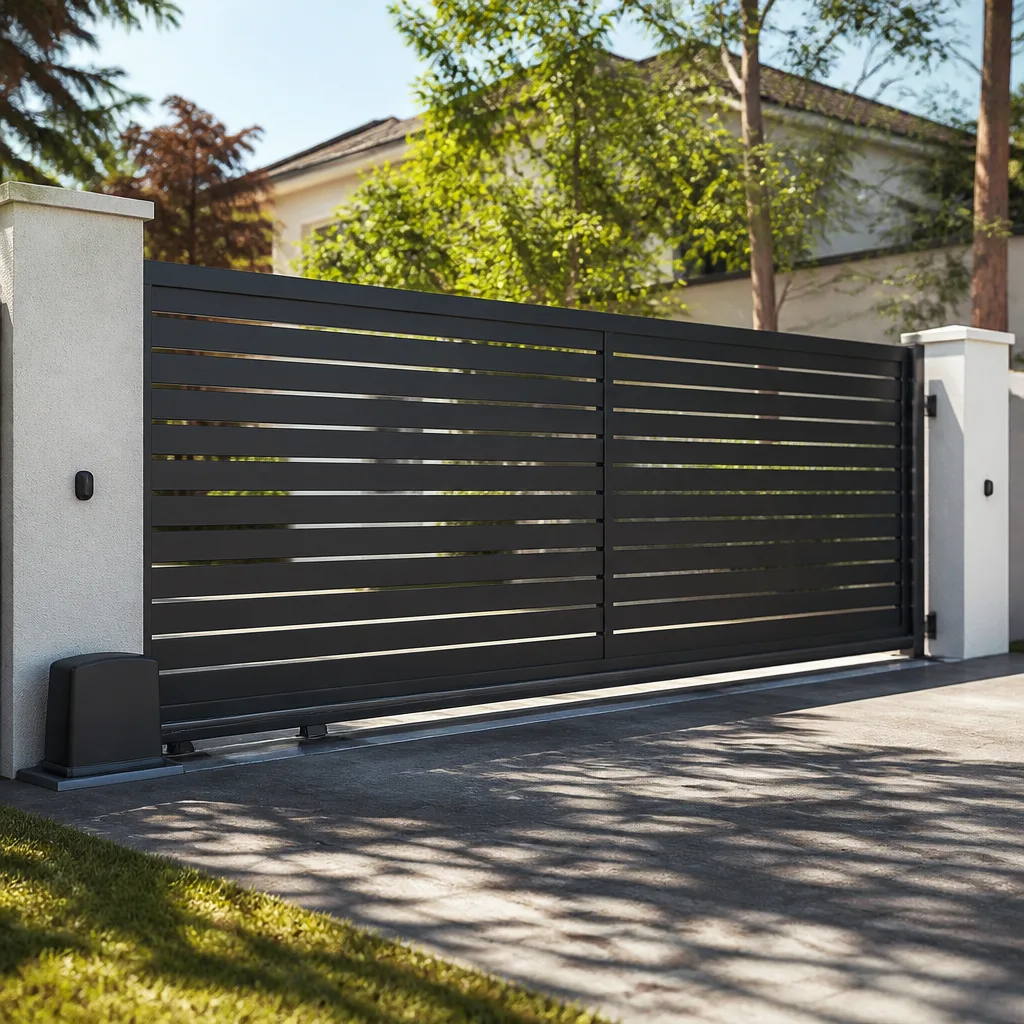 Sliding driveway gates
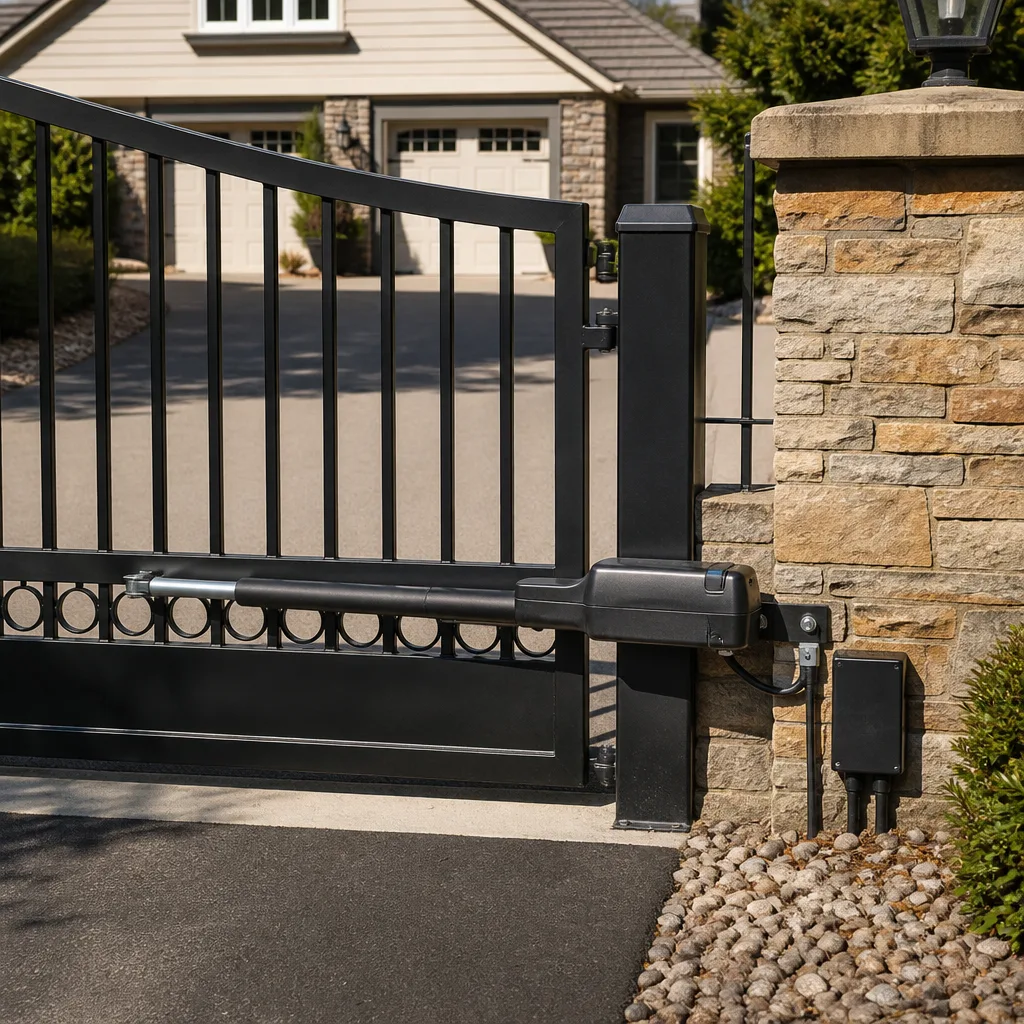 LiftMaster operators
Free on-site gate assessment - hinges, posts, and your LiftMaster or Nice gate operator checked before anything is quoted
The assessment is free and the quote is the invoice.
Get your free estimateGate Repair Maintenance Checklist for Lake View Terrace Homeowners
Most maintenance checklists tell you to “lubricate moving parts.” That advice is correct and almost useless without knowing which lubricant destroys which operator seals. A silicone spray that works fine on a Ghost Controls chain drive will break down the internal seals on a DoorKing worm gear operator, and that’s a $400 mistake before labor. This guide is built around the real variables that affect gates in Lake View Terrace: hillside load stress, summer heat that cooks capacitors, and dust that works its way into every exposed joint. We’re going to give you a checklist that catches the three or four things that actually cause 80% of gate failures, and we’ll tell you exactly what to do about each one.
For the full scope of what we handle as a dedicated Gate Repair Lake View Terrace home specialist, this guide covers both residential and light commercial systems.
Quick Answer
A gate maintenance checklist for Lake View Terrace homeowners should be done twice a year and covers five core areas: operator lubrication with brand-compatible products, hinge and track cleaning, electrical connection inspection including battery backup, safety sensor and loop detector testing, and slope-specific hardware checks. Most homeowners can complete basic visual and cleaning tasks in 30 minutes, but electrical diagnostics and safety system calibration typically require a technician with multi-brand training.
Styles & brands we work with
- Wrought iron
- Wood & steel frame
- Farm & ranch
- Sliding driveway gates
- LiftMaster operators
Table of Contents
- Lubricant Compatibility by Brand and Component Type
- Slope-Specific Inspection Points for Hillside Installations
- Electrical and Battery Backup Checks for High-Heat Environments
- How to Test Safety Reverse and Loop Detector Sensors Correctly
- Realistic Time Estimates: 30 Minutes vs. What Needs a Technician
- Seasonal Maintenance Schedule for Lake View Terrace
- Common Mistakes to Avoid
- When to Call a Professional
- Frequently Asked Questions
Lubricant Compatibility by Brand and Component Type
Here’s the thing no generic checklist tells you: not all gate lubricants are interchangeable, and using the wrong one can void warranties and destroy seals. We see this in Lake View Terrace regularly because the dry, dusty conditions push homeowners to over-lubricate, which creates a gummy paste that attracts grit. Before you spray anything, identify your operator type.
Chain drive operators, common on Ghost Controls and Mighty Mule residential systems, use a lightweight penetrating oil or a dry chain lubricant. Look for products labeled for motorcycle or garage door chains. Avoid white lithium grease here. It captures dust, hardens in heat, and creates resistance that forces the motor to work harder. In our experience with Lake View Terrace’s summer dust, a dry film lubricant applied sparingly every four to six months works best.
Worm gear operators, found on many DoorKing and Elite commercial-grade units, are sealed systems that do not need external lubrication. If you see grease fittings on the outside, use a small amount of high-temperature bearing grease. Never use spray silicone on these assemblies. The solvent carrier in many aerosol sprays penetrates seals and degrades the internal lubricant, causing the worm gear to run dry and strip. That failure mode is one of the most expensive repairs we handle, and it’s almost always the result of well-meaning maintenance.
Hydraulic systems, used on some FAAC and BFT operators, require a completely different approach. Do not lubricate the cylinders. Check for fluid weeping at the seals, and check the fluid level if your model has a reservoir. Use only the manufacturer-specified hydraulic fluid. Generic alternatives change viscosity under Lake View Terrace heat and cause sluggish operation in summer.
Hinges and pivot points on the gate itself are the one place where a general-purpose lubricant is usually safe. Use a dry graphite spray or a small amount of silicone on hinge pins and bearing surfaces. Wipe away excess after application. Excess lubricant on hinges drips onto concrete, stains it, and creates a dust magnet. For a home guide to Gate Repair in Lake View Terrace, the lubricant section is where most people get it wrong, so take your time here.
Slope-Specific Inspection Points for Hillside Installations
A wrought iron swing gate on a hillside lot in Lake View Terrace ages completely differently than a vinyl sliding gate on flat terrain. Gravity is always pulling on the gate, and on a slope, that pull is uneven. The downhill hinge carries more weight than the uphill one. The operator motor works harder in one direction than the other. Flat-lot checklists miss this entirely.
Walk through these checks if your gate sits on any grade:
- Check hinge sag every month. Stand back and look at the top edge of the gate. It should be level. If the latch-side end droops even half an inch, the downhill hinge bearing is wearing. Replace the hinge before the gate starts dragging on the ground.
- Inspect the gate stop and catch post. On a slope, a gate that slams closed carries more momentum than flat terrain. The stop post absorbs that force. Look for cracking at the base of the post, loosening of the bolts, or bending of the catch.
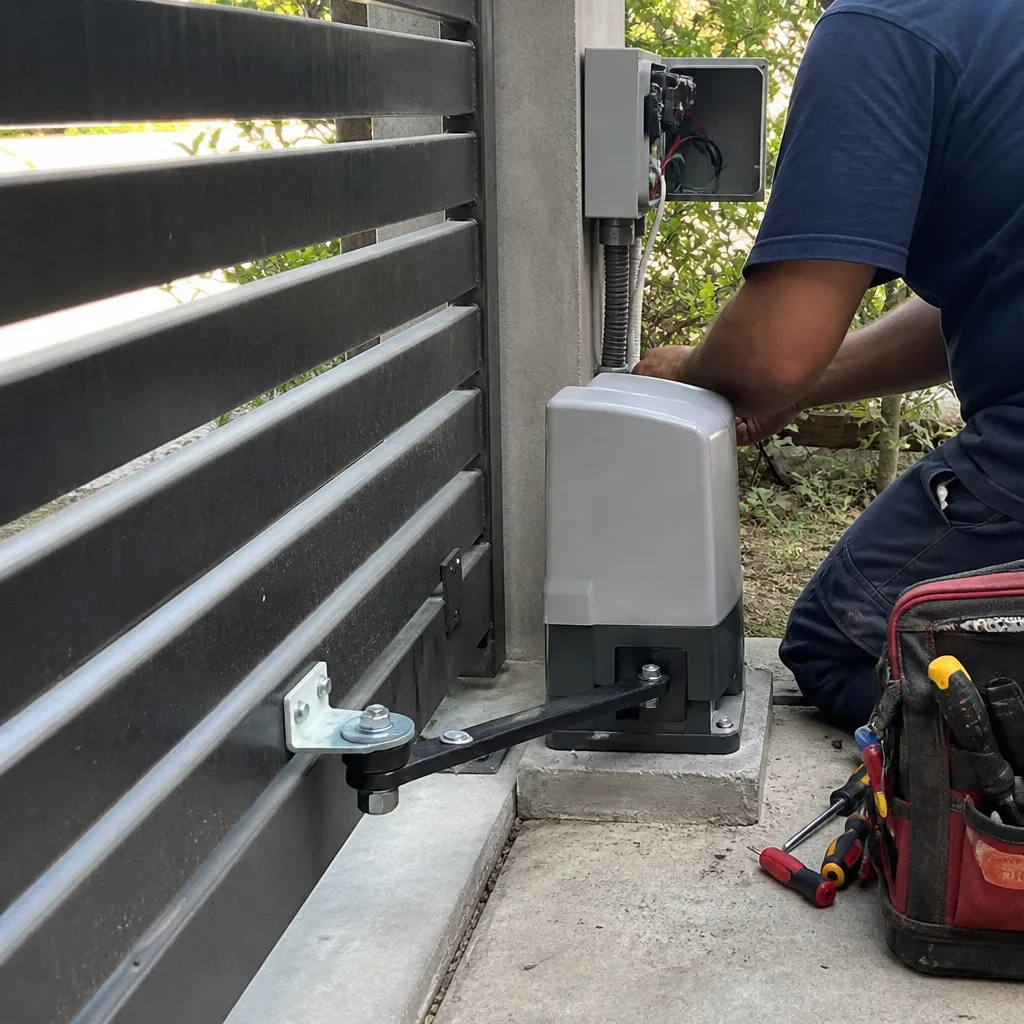
- Test the operator’s effort in both directions. Open the gate manually by disengaging the operator release. It should move with equal resistance in both directions. If it’s noticeably harder to push uphill, the operator is compensating for a mechanical problem, and that shortens motor life.
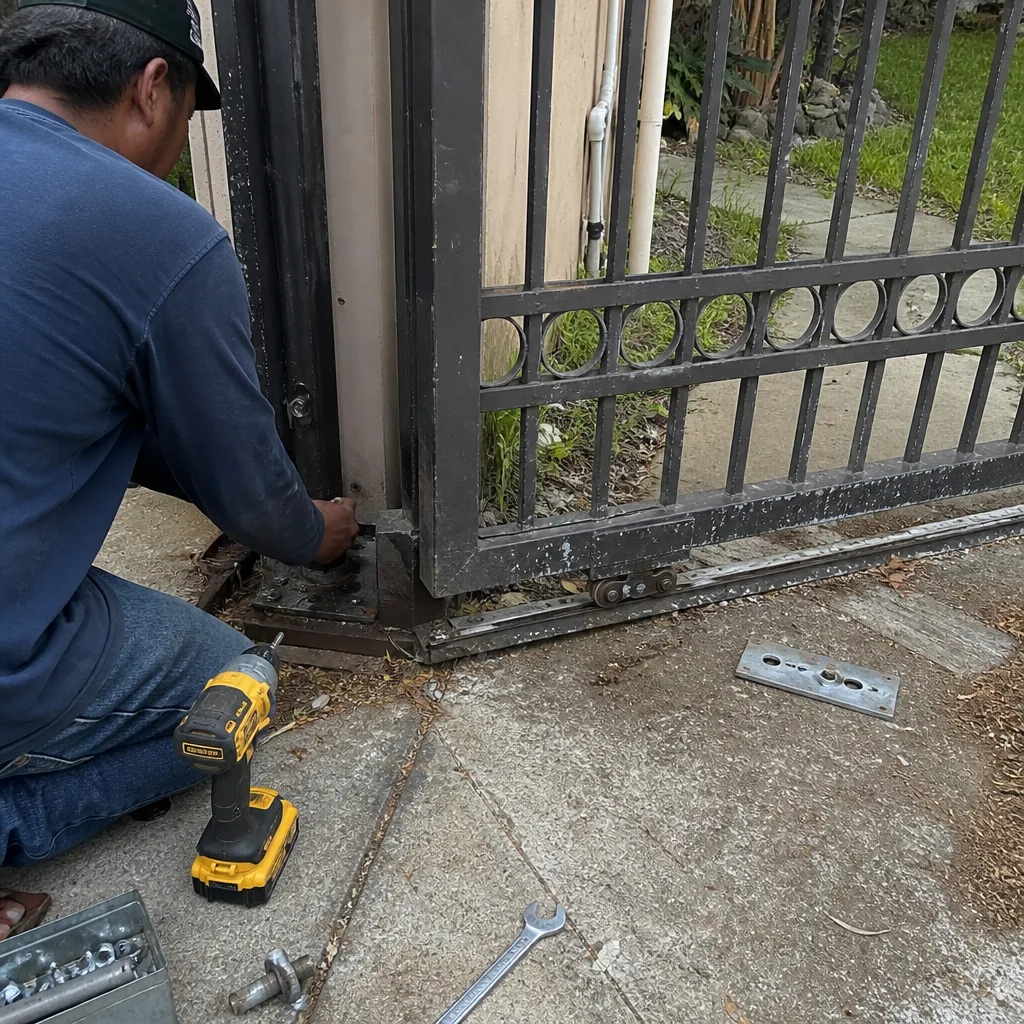
- Check wheel tracking on slide gates. For a sliding gate on a slope, the track should be level even if the surrounding terrain isn’t. Any settlement under the track creates a dip that makes the gate bind and torque the drive sprocket.
- Look at the mounting plate welds. The operator bracket takes repetitive stress on hillside installs. Hairline cracks at weld points are visible if you look closely. Catch them before they fail completely.
Slope stress is cumulative. A hinge that’s fine this month might be sagging in six months. Lake View Terrace hillside lots make this a higher priority than most owners realize. If you’re installing a new gate, our Gate Installation in Lake View Terrace team factors slope load into the operator sizing from day one, which prevents a lot of these failures before they start.
Electrical and Battery Backup Checks for High-Heat Environments
Lake View Terrace summers routinely hit triple digits, and heat is the enemy of every electronic component in your gate system. Capacitors, the components that give the motor its starting jolt, degrade faster in sustained heat than in moderate climates. Backup batteries, which sit inside the operator housing where temperatures can reach 140 degrees on a hot afternoon, lose capacity at roughly twice the rate of batteries in shaded or indoor installations.
Here’s what to check, in order of importance:
- Battery backup voltage. If your gate has a battery backup, test it every three months, not once a year. Disconnect AC power at the breaker and operate the gate on battery alone. A healthy battery should cycle the gate at least ten times without slowing noticeably. If it struggles after five cycles, replace it. In Lake View Terrace heat, batteries typically need replacement every two to three years, not the five years quoted in mild climates.
- Look for swollen capacitors. With power disconnected, open the operator cover and look at the circuit board. Capacitors are cylindrical components. A healthy one has a flat top. A swollen or bulging top means the capacitor is failing or has already failed. This is a diagnostic check, not a repair. Leave it to a technician who can safely discharge the stored energy.
- Tighten terminal connections. Thermal cycling, the daily expansion and contraction from hot afternoons to cool nights, loosens screw terminals over time. A loose connection creates resistance, which creates more heat, which accelerates failure. Tighten every terminal you can access. Use a screwdriver with an insulated handle and make sure power is off first.
- Check the solar panel if you have one. Many Lake View Terrace homeowners use solar panels to power gate operators on lots without convenient conduit runs. Dust and bird droppings reduce solar efficiency significantly. Clean the panel surface every month during dry season. A dirty panel can drop output by 30%, and undercharging shortens battery life dramatically.
- Verify the control board cooling vents are clear. Most operators have small vents or louvers on the housing. If these are clogged with dust, spider webs, or debris, internal temperatures climb. A vacuum or a can of compressed air clears them in minutes.
Electrical work on gate systems carries real risk. Line voltage is inside the operator housing, and capacitors store charge even after power is disconnected. If you’re not comfortable working with electrical components, that’s the smart call to make. For Electric Gate Repair in Lake View Terrace, we handle motor diagnostics, control board troubleshooting, and loop detector calibration as named services, so electrical checks that go beyond visual inspection don’t require a second call to a different technician.
How to Test Safety Reverse and Loop Detector Sensors Correctly
The phrase “put your hand in the way” is how most people describe testing a gate’s safety reverse, and it’s also how people get hurt. Testing safety functions is serious, and there are right and wrong ways to do it. The goal is to verify the system works without putting anyone in the path of a moving gate.
Safety reverse (also called the entrapment protection system):
- Start with the gate in the fully open position.
- Place a solid object in the gate’s path. Use something like a traffic cone, a five-gallon bucket filled with sand, or a piece of lumber standing upright. Do not use a person, a pet, or your hand.
- Activate the gate to close. The gate should reverse direction within two seconds of contacting the object. If it pushes the object instead of reversing, the force setting is too high or the safety system has failed. Stop using the gate immediately and call a technician.
- Test the non-contact sensors (photo eyes) separately. Wave an object between the photo eye beam while the gate is closing. The gate should reverse without touching anything. If it doesn’t, the photo eyes are misaligned, dirty, or failed.
- Repeat the test once a month. Safety systems fail quietly. You won’t know until the gate hits something, and that’s the test you don’t want.
Loop detector testing:
Loop detectors are the sensors embedded in the driveway that tell the gate when a car is present. They prevent the gate from closing on a vehicle, and they trigger automatic opening for exiting traffic. Testing them is simpler than safety reverse, but it’s less intuitive.
- Drive a vehicle slowly across the loop area while the gate is open. The gate should remain open as long as the vehicle is over the loop.
- Park the vehicle over the loop and activate the close command from inside the vehicle. The gate should refuse to close or immediately reverse.
- Test the exit loop if you have one. Approaching from the inside should trigger the gate to open automatically.
- Listen for clicking from the loop detector module. A rapidly clicking relay when no vehicle is present usually means a broken loop wire or a sensitivity setting that’s too high.
Loop detector calibration is one of the most common calls we get for Electric Gate Repair in Lake View Terrace. The symptoms are subtle: the gate closes slowly, the exit loop stops working, or the gate opens randomly at night. All of these point to loop sensitivity issues that a visual inspection won’t catch.
Realistic Time Estimates: 30 Minutes vs. What Needs a Technician
Most homeowners want to know what they can realistically do themselves and what requires a professional. Here’s the honest breakdown based on what we see in Lake View Terrace every week.
What a homeowner can do in 30 minutes:
- Visual inspection of hinges, welds, and mounting brackets: 10 minutes
- Cleaning photo eye lenses with a soft cloth: 5 minutes
- Lubricating hinges and chain drives with compatible products: 10 minutes
- Clearing debris from the gate track and checking for obstructions: 5 minutes
What takes longer but is still homeowner-appropriate:
- Battery backup testing (includes disconnecting and reconnecting power): 30 – 45 minutes
- Full safety reverse and loop detector testing: 20 – 30 minutes
- Cleaning solar panels and checking wiring connections: 30 minutes
What needs a technician:
- Capacitor replacement or any circuit board work: 30 – 60 minutes for a trained technician, and dangerous for anyone else
- Worm gear lubrication on sealed DoorKing or Elite operators: 20 minutes, but requires opening the sealed assembly and knowing what not to touch
- Loop detector sensitivity calibration: 30 minutes, requires a meter and experience reading detector behavior
- Hinge replacement on a heavy wrought iron gate: 1 – 2 hours, requires proper lifting equipment and shimming to restore level operation
- Hydraulic fluid service on FAAC or BFT systems: 45 minutes, requires the correct fluid and bleed procedure
The common theme: anything that involves calibration, sealed components, or live electrical work belongs with a specialist. We service equipment from nine brands including LiftMaster, FAAC, BFT, Linear, Viking, Ghost Controls, DoorKing, Elite, and Mighty Mule, which means one call covers diagnostics and repair without bouncing between technicians who don’t know your specific hardware.
Seasonal Maintenance Schedule for Lake View Terrace
Lake View Terrace has two seasons that matter for gate maintenance: the dry heat of summer and the occasional heavy rain of winter. Here’s a schedule built around those two realities.
Spring, before the heat hits:
- Complete the full visual inspection, including hinge sag and weld checks
- Test battery backup under load and replace if it’s more than two years old
- Clean solar panels and confirm charging output
- Check all terminal connections and tighten anything loose
- Lubricate hinges and chains with compatible products
- Test safety reverse and photo eyes
Fall, before winter rain:
- Check drainage around the gate track and operator pad. Standing water shortens operator life rapidly.
- Re-inspect hinge wear after a summer of heat-related expansion and contraction
- Verify weatherstripping or sealant around the operator housing is intact
- Test the loop detectors while the ground is dry, which gives the most accurate baseline
- Clean track rollers and check for pitting or flat spots
Monthly, year-round:
- Clear debris from the track and gate path
- Wipe photo eye lenses clean
- Listen for unusual sounds during operation: grinding, squealing, hesitation
If you’re looking for a more detailed breakdown of what gate repair in Lake View Terrace involves when something fails, our main service page covers common failure modes and repair scopes.
Common Mistakes to Avoid
- Using WD-40 on operator components. WD-40 is a solvent, not a lubricant. It cleans and then evaporates, leaving metal surfaces dryer than before. On chains, it’s acceptable as a cleaner before applying a proper lubricant, but using it as the only lubricant is a fast way to wear out pins and rollers.
- Ignoring a gate that closes slower than it used to. Slow operation is almost always an early warning sign, not a quirk. It usually indicates a failing capacitor, low fluid in a hydraulic system, or a motor running on reduced voltage. Catch it early and the repair is a part, not a full operator replacement.
- Spraying lubricant into the photo eye housings. Photo eyes are optical sensors, and lubricant fogs the lens and attracts dust. The result is a safety system that stops working correctly. Only clean photo eyes with a dry or lightly dampened cloth.
- Tightening bolts without checking alignment first. A gate that’s been hit by a car or wind has bent hardware. Tightening bent hardware locks the misalignment in place. Check for straight and level before you torque anything.
- Running a gate manually after disengaging the operator without resetting the limit switches. On many brands, manual operation with the operator disengaged moves the gate out of sync with the internal limits. When you re-engage, the gate may not stop at the correct positions. Follow the brand-specific re-engagement procedure, which usually involves opening fully, closing fully, then cycling once on automatic.
- Replacing batteries with the cheapest available option. Gate operators use sealed lead-acid or lithium batteries depending on the brand and model. Using a battery with the wrong voltage, chemistry, or amp-hour rating damages the charging circuit. Match the battery to the operator, not the price tag.
- Forgetting that Lake View Terrace dirt roads mean extra track maintenance. Homes on unpaved roads deal with more dust and more track fouling than paved neighborhoods. If you’re on a dirt road, double the frequency of track cleaning and photo eye maintenance.
When to Call a Professional
Some gate problems are obvious: the gate won’t move, the motor runs but the gate doesn’t, or the operator makes a grinding noise. Those are clear calls for a technician. Other signs are more subtle but equally urgent: the gate reverses randomly, the keypad stops responding, the gate works in one direction but not the other, or the circuit breaker trips repeatedly. Any of these indicates an electrical or mechanical fault that DIY maintenance can’t address, and continued operation risks compounding the damage. Gate Repair Lake View Terrace offers free estimates in Lake View Terrace. Call (833) 696-4511 and we’ll diagnose the issue on site before any work is quoted.
Frequently Asked Questions
Professional service twice a year is the right cadence for most Lake View Terrace gates: once in spring before the heat, and once in fall before rain. But if your gate is on a hillside, on a dirt road, or gets more than ten cycles a day, quarterly visits catch wear patterns before they become failures. Homeowners should handle the visual and cleaning tasks monthly, but calibration and electrical checks benefit from a technician who sees hundreds of gates and knows what’s normal for your specific brand.
For a Ghost Controls chain drive opener, use a dry film chain lubricant or a light penetrating oil applied to the chain only. Do not use white lithium grease, which traps the dust that Lake View Terrace is known for and creates abrasive paste. The hinges on the gate itself can take a silicone or graphite spray, but the chain needs a product that won’t attract dirt. If you’re unsure, a technician can identify the correct product in seconds.
Summer heat affects gate systems in three ways: capacitors lose efficiency as they age and heat accelerates that degradation, hydraulic fluid thins and reduces operating pressure, and motors run hotter with more resistance in the windings. A gate that’s slow in July but fine in January usually has a marginal capacitor or fluid that’s past its service life. The sooner it’s diagnosed, the less likely you’ll be replacing the entire operator instead of a single component.
Gate repair in Lake View Terrace typically ranges from $150 for minor adjustments like photo eye realignment or hinge tightening to $800 or more for control board replacement or motor service on commercial-grade operators. Most common repairs fall in the $200 to $450 range. The exact cost depends on your operator brand, the specific component, and whether parts are in stock locally. Call (833) 696-4511 for an exact quote. Estimates are free, and the price is agreed before any work starts.
Yes, you can and should test safety reverse monthly. Use a solid object like a five-gallon bucket filled with sand or a traffic cone, place it in the gate’s path, and close the gate. The gate should reverse within two seconds of contact. If it pushes the object, stop using the gate and call a technician. Never test safety reverse with your hand or body. The purpose of the test is to avoid physical contact with a moving gate.
Yes. We work on residential systems from brands like Ghost Controls and Mighty Mule, and we’re equally comfortable with commercial-grade operators from DoorKing, FAAC, BFT, and Elite. That range matters because commercial operators have different safety requirements, loop detector configurations, and service procedures than residential units. One call covers both types, so you don’t need to hunt for separate technicians if you own residential and commercial property in the Lake View Terrace area.
If your gate is stuck open, first check whether the operator release can be disengaged so you can close the gate manually and secure your property. Then check for obvious obstructions in the track or gate path. If the gate still won’t operate after clearing obstructions and disengaging and re-engaging the operator, the problem is electrical or mechanical inside the operator. That’s the point to call us at (833) 696-4511. A stuck-open gate is a security vulnerability in Lake View Terrace, so don’t wait to address it.
The Bottom Line
A gate maintenance checklist for Lake View Terrace homeowners comes down to five things: use the right lubricant for your specific operator type, inspect hinges and welds for hillside stress, test your battery backup every three months in the heat, verify safety reverse and loop detectors monthly, and call a technician for anything involving calibration, sealed components, or live electrical work. Most homeowners can handle the visual and cleaning tasks in 30 minutes. The brand-specific and electrical work is where a multi-brand gate specialist earns the call. If you’re buying a new gate, see our gate installation in Lake View Terrace page for details on operator sizing and slope considerations. If something’s already failing, start with gate repair in Lake View Terrace. For electrical symptoms, go straight to electric gate repair in Lake View Terrace. Call (833) 696-4511 for a free estimate, and we’ll help you catch the few things that actually cause most gate failures before they leave your driveway stuck.
Written by the team at Gate Repair Lake View Terrace, serving Lake View Terrace since 2012.
See the difference
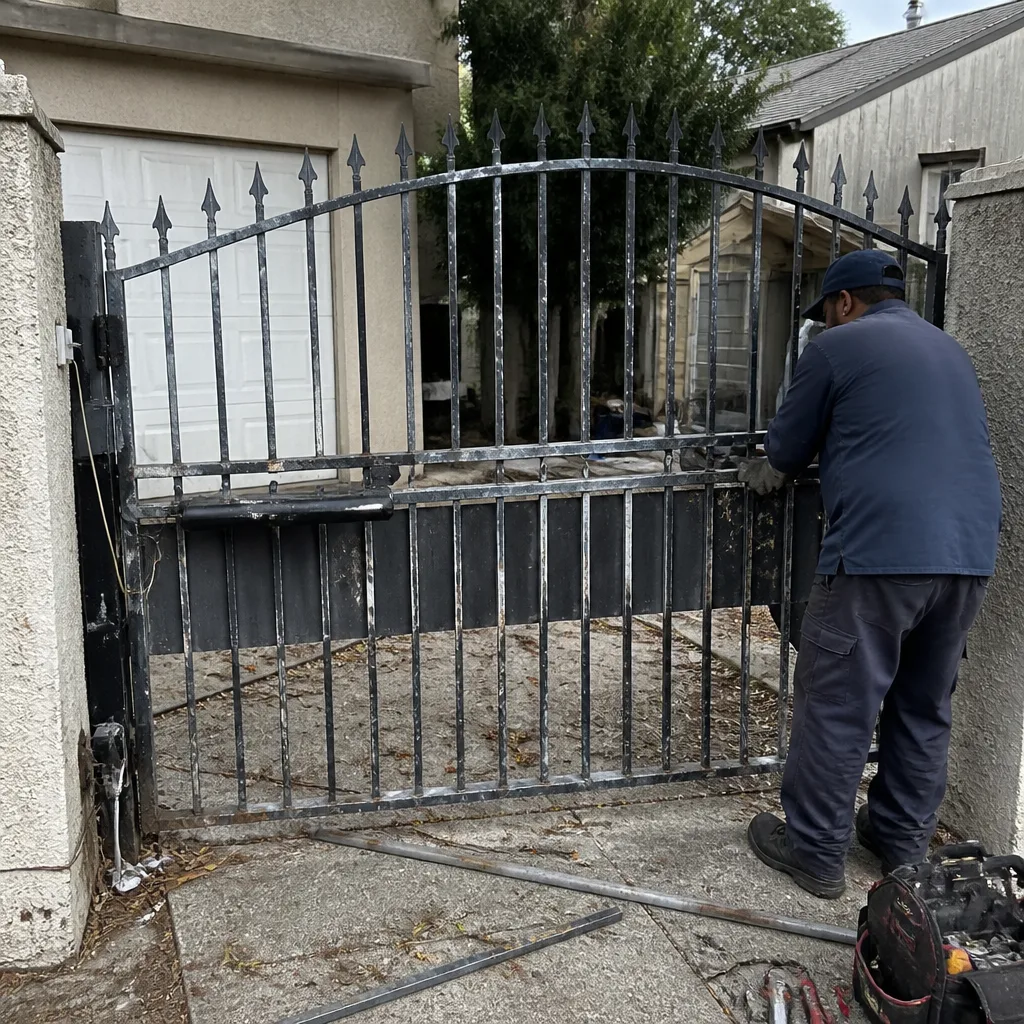 Before
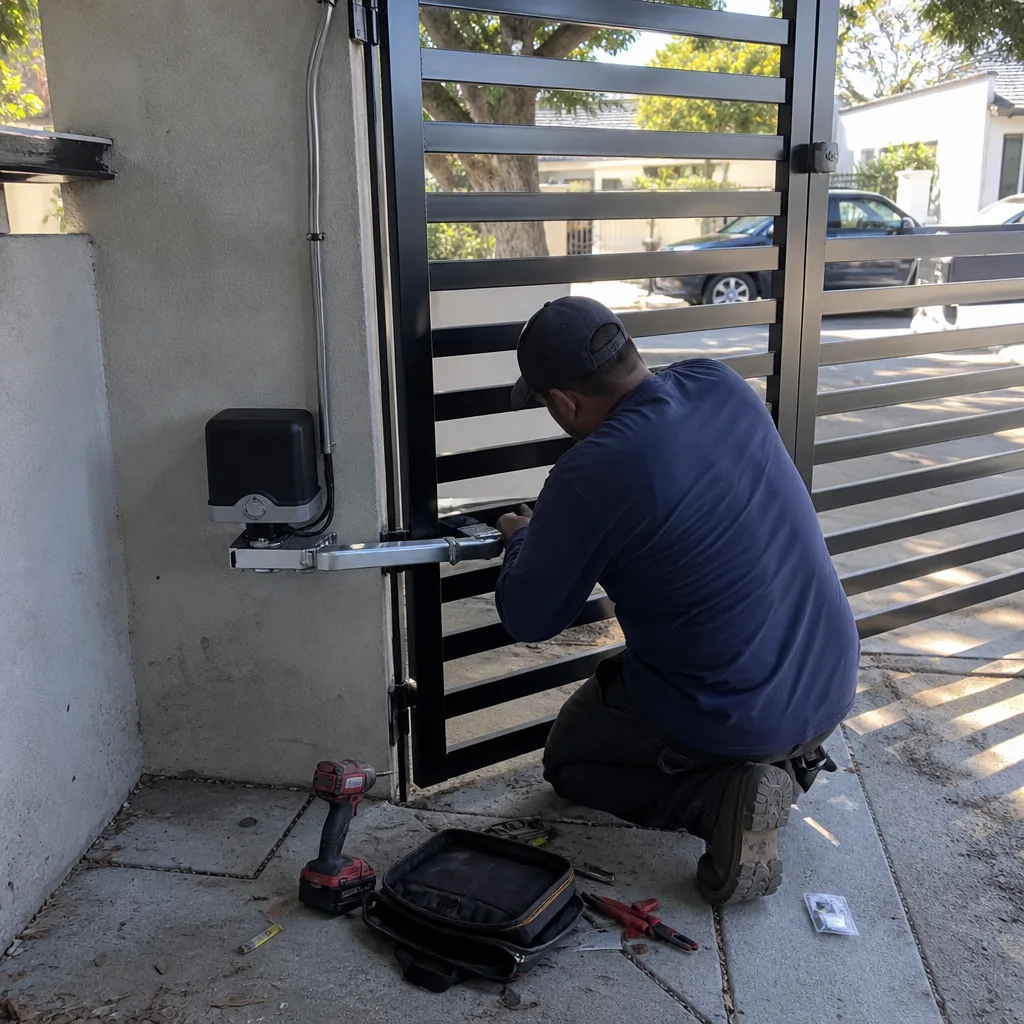 After
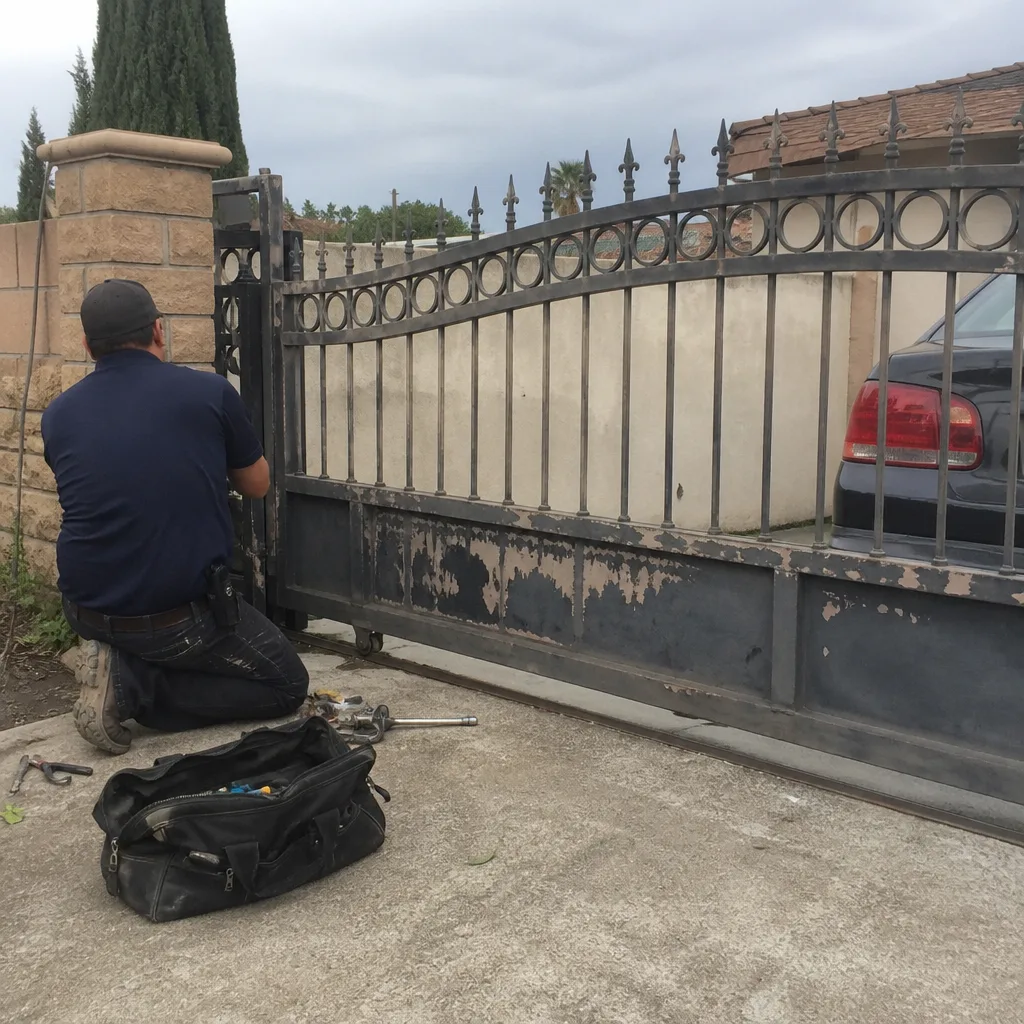 Before
 After
 Before
 After