
Last updated November 2, 2026
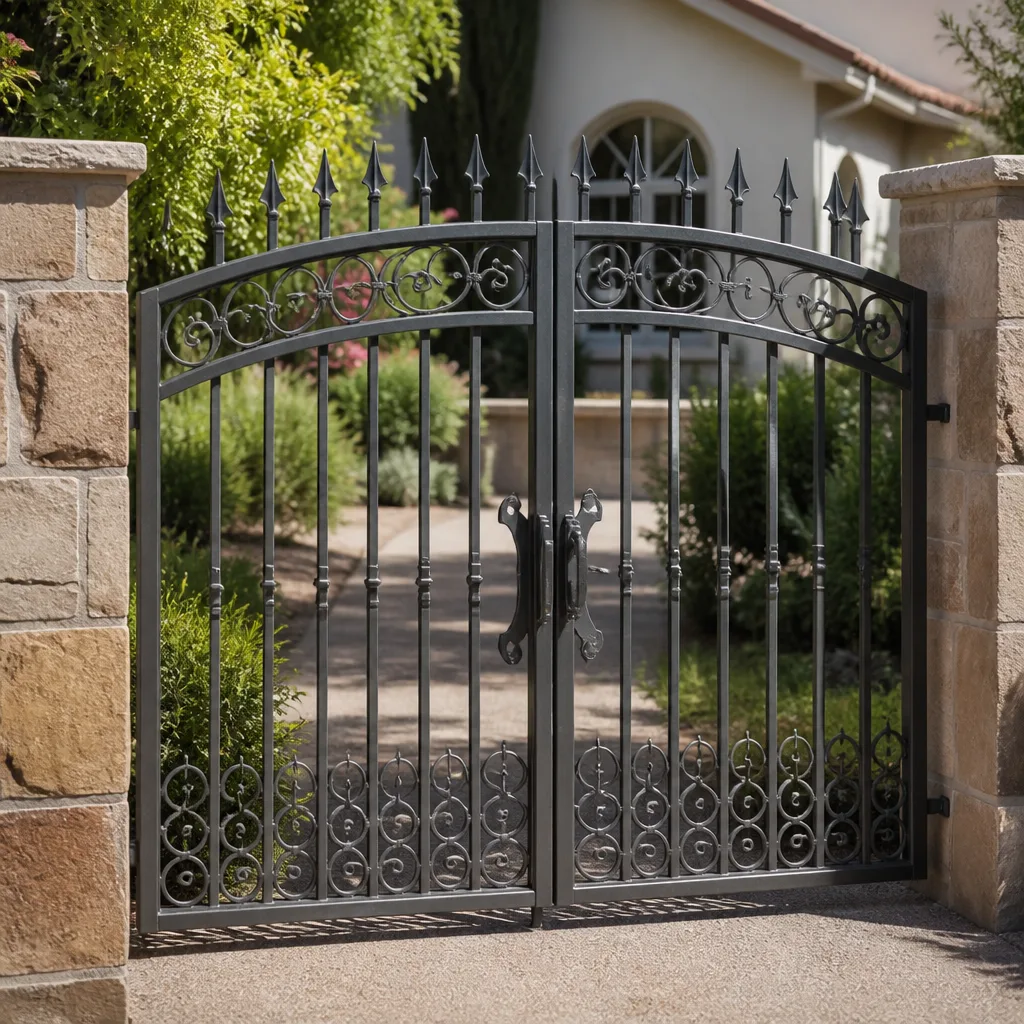 Wrought iron
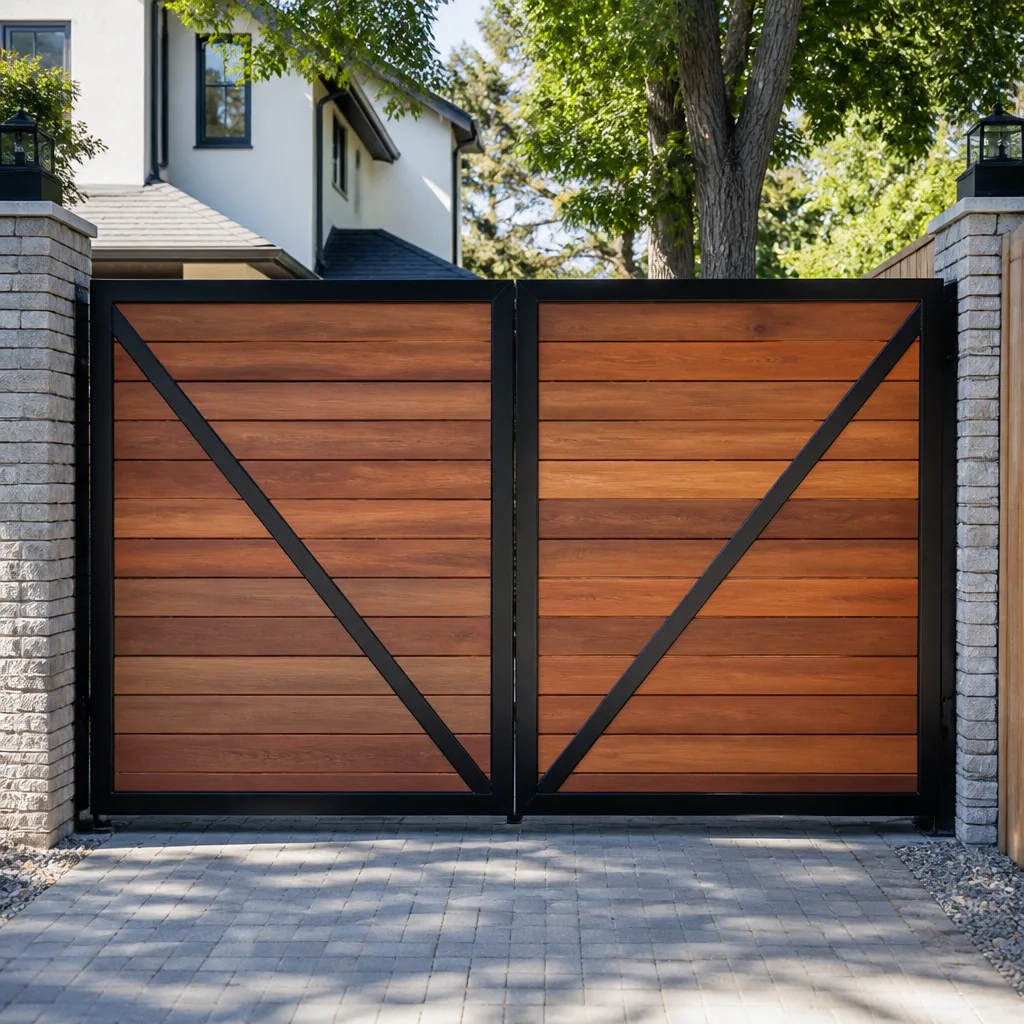 Wood & steel frame
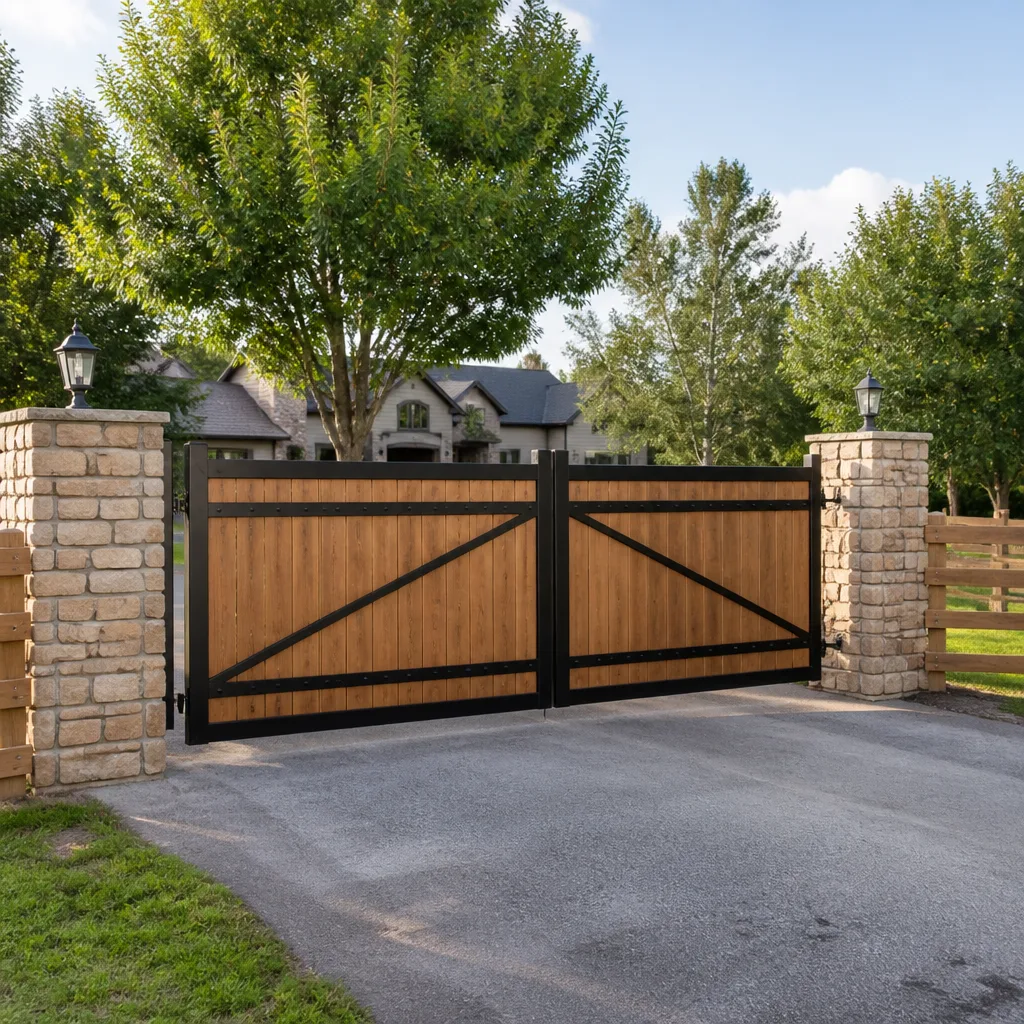 Farm & ranch
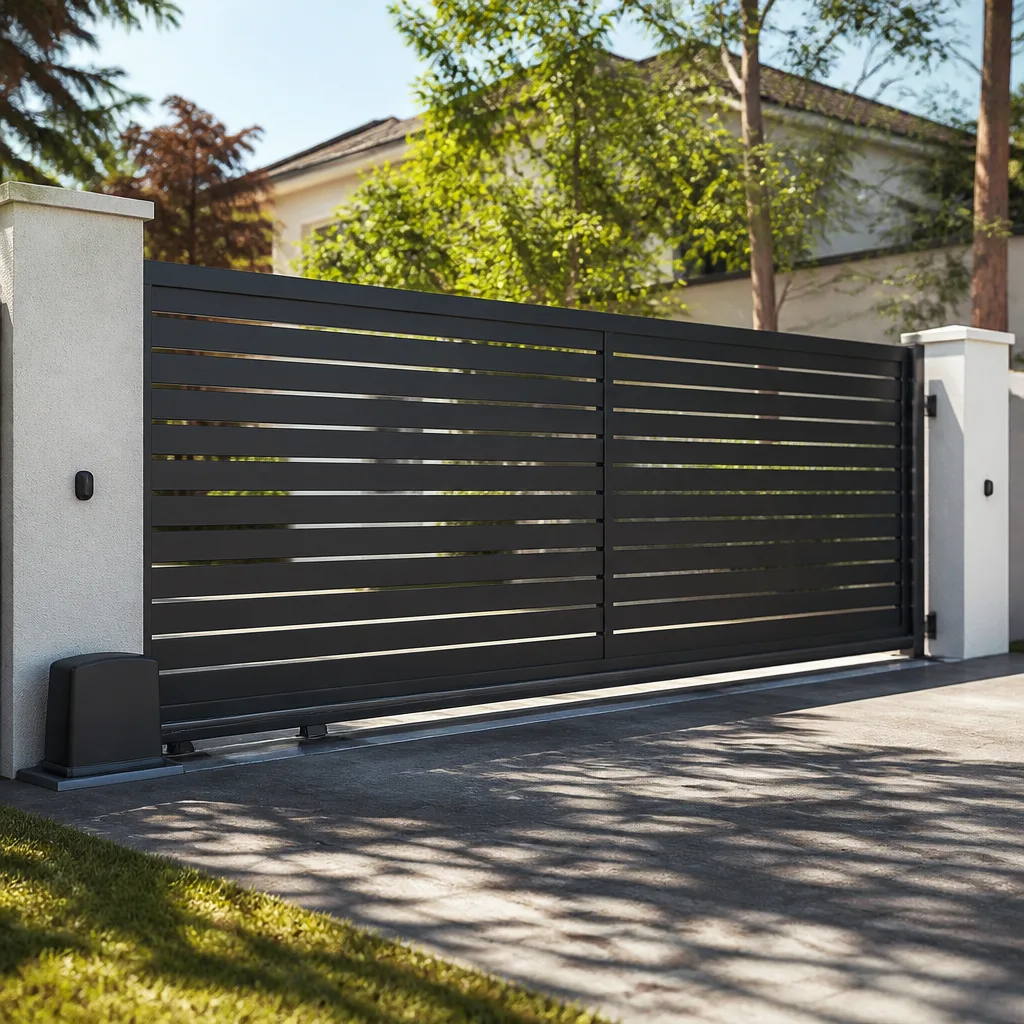 Sliding driveway gates
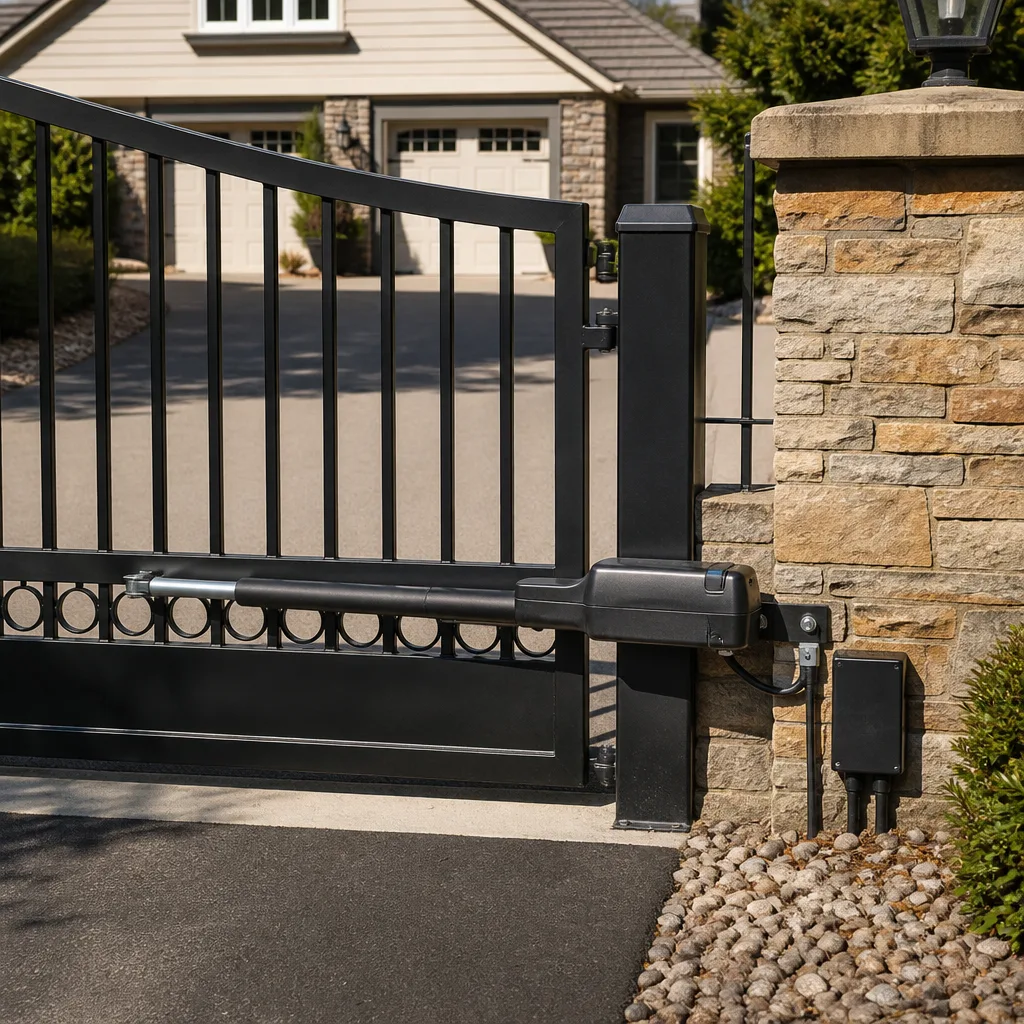 LiftMaster operators
Free on-site gate assessment - hinges, posts, and your LiftMaster or Nice gate operator checked before anything is quoted
The assessment is free and the quote is the invoice.
Get your free estimateGate Repair Warning Signs: A Lake View Terrace Homeowner’s Reference Guide
A gate that hesitates for two seconds before moving isn’t “warming up” – it’s an operator working against increased mechanical resistance, which is how most motor burnouts announce themselves weeks in advance. In Lake View Terrace, where summer heat bakes gate hardware and the occasional winter rain works its way into electrical enclosures, these warnings show up in patterns that most homeowners miss until the gate simply won’t move. This guide teaches you to read the failure language your specific gate type is speaking: the sounds, the movement quirks, the visual clues, and the brand-specific error codes that tell you exactly what’s failing and how much time you have before it’s an emergency. For professional help, see our Gate Repair services. By the end, you’ll know which four warning signs mean call today versus the ones that give you two to four weeks to schedule non-emergency service.
Quick Answer
Most gate failures in Lake View Terrace present as grinding, clicking, or whining sounds during operation; slow or jerky travel; posts that lean or show crack lines at weld points; and flashing diagnostic codes on the operator’s control board. Each of these signals points to a distinct root cause – worn rollers, declining motor capacitors, failing loop detectors, or structural fatigue – and most are repairable before the gate locks you out or off its track entirely. We work on LiftMaster, FAAC, BFT, Viking, DoorKing, Mighty Mule, and other major brands, so identifying your operator type is the first step.
Styles & brands we work with
- Wrought iron
- Wood & steel frame
- Farm & ranch
- Sliding driveway gates
- LiftMaster operators
Table of Contents
- Sound-Based Diagnostics: What Your Gate Is Telling You
- Movement Pattern Analysis: Motor vs. Track vs. Control Board
- Visual Indicators Non-Specialists Miss
- Operator Warning Codes by Brand: What the Blinks Mean
- The 4 Signs That Mean Call Today vs. the 4 You Can Schedule
- Lake View Terrace-Specific Factors That Accelerate Gate Wear
- How to Walk Your Gate: A 10-Minute Monthly Inspection
Sound-Based Diagnostics: What Your Gate Is Telling You
Automatic gates have a limited vocabulary, but they use it consistently. The sounds your gate makes are not random – each one corresponds to a specific mechanical or electrical event. Learning to distinguish them is the fastest way to know whether you’re dealing with a $40 wheel replacement or a $900 operator rebuild. We’ve diagnosed hundreds of gates across Lake View Terrace by listening before we ever open a panel, and the patterns hold across every major brand.
Grinding: Metal on Metal, Every Time
Grinding during travel almost always means a roller, wheel, or bearing has lost its smooth surface. On sliding gates, it’s the V-groove wheels biting against a worn track or a wheel whose bearing has seized and is now dragging through the guide. On swing gates, grinding at the hinge line points to a hinge whose internal bearing has collapsed from years of heat expansion and contraction. If you hear grinding only in one travel direction, the failure is likely on one side of the track or one hinge rather than both. Ignore this for two weeks and the affected wheel or hinge will machine a flat spot into its mating surface, which turns a $40 roller replacement into a $400 track section replacement.
Clicking: The Electrical Signature
A rapid click-click-click when you press the remote or keypad usually means the operator is trying to engage but the start capacitor has degraded to the point where it can’t maintain the initial voltage spike. Think of it like a starter motor on a car trying to turn over with a weak battery. On Mighty Mule systems, a slower deliberate click repeated three times is often the control board reporting a fault rather than attempting a start. LiftMaster operators use a mechanical relay click that sounds slightly different from the capacitor-struggle click, and after enough repetitions you can tell them apart by rhythm alone. A clicking gate that eventually starts moving is not fixed; the capacitor will fail completely, usually within two to four weeks.
Whining or High-Pitched Humming
A continuous whine during operation comes from the motor itself or from a gear train that’s fighting excessive resistance. On hydraulic operators like many FAAC and BFT models, a whine with no movement often indicates low hydraulic fluid or a failing pump seal. On electromechanical operators like Viking and DoorKing, the whine is usually the motor spinning at high RPM against a stripped nylon gear inside the reduction box. That gear is a sacrificial component by design – better to strip a $60 gear than bend a $2,000 gate frame – but it only sacrifices itself once. If your gate whines and inches forward in small jerks, plan on gear replacement before the motor overheats and fails entirely.
Slapping or Popping
A sharp slap when the gate reaches its open or closed limit often means the limit switch has drifted out of adjustment or failed entirely, so the operator doesn’t know when to stop applying force. A popping sound mid-travel on a swing gate frequently comes from a hinge pin that has developed play and is shifting under load. Both sounds mean the operator is working outside its designed force envelope, which shortens motor life and stresses welds at the hinge points.
If you’re hearing any of these sounds more than once a week, or if the sound has changed in pitch or volume in the last month, it’s time for a diagnosis. Our gate repair in Lake View Terrace starts with listening before we ever remove a cover. Sound tells us where to look, and that keeps the diagnostic hour efficient.
Movement Pattern Analysis: Motor vs. Track vs. Control Board
How a gate moves – not just that it moves badly – tells you which subsystem is failing. The three most common failure points are the mechanical path (wheels, track, hinges, posts), the operator (motor, gearbox, capacitors), and the control logic (board, loop detector, limit switches). Each produces a distinct movement signature, and reading that signature correctly means you don’t pay for a motor you didn’t need.
Telling the Three Apart
- Jerky movement that smooths out: If the gate stutters at the first foot or two of travel and then moves smoothly, look at the wheels and track first. Cold grease, a minor flat spot on a V-wheel, or a small bit of debris at the track seam causes exactly this pattern. The motor is fine; it’s fighting a localized mechanical obstruction.
- Consistent slowdown with no jerking: If the gate accelerates normally but gradually loses speed throughout the travel arc and seems to “sag,” the motor or gearbox is typically the problem. A declining run capacitor creates this pattern, as does a gear that’s beginning to slip under sustained load. Track problems are jerky; motor problems are smooth and gradual.
- Gate stops midway and reverses for no reason: This is nearly always a control board or safety sensor issue, not a mechanical problem. A failing loop detector or a misaligned photo eye tells the control board that an obstruction exists when none does. The board responds by opening or closing to the safe position, and the homeowner interprets it as a “random” movement. It’s not random; it’s a sensor reporting a false positive.
- Gate moves slower in one direction than the other: On a swing gate, this points to hinge binding on one side or a post that’s leaning just enough to shift the gate’s center of gravity. On a slide gate, it means one end of the track is worn differently than the other. Neither is a motor problem, and replacing the operator won’t fix it.
What the Pause Means
If your gate hesitates for one to three seconds before moving after you press the remote, the operator is working harder than it should to get things started. On electromechanical systems, this is the motor drawing additional current during the start phase because the mechanical load has increased – usually from a wheel or hinge that’s begun to resist. On hydraulic systems, it means the pump is taking longer to build operating pressure, which often traces to low fluid. Either way, the operator is telling you something changed. Most motor burnouts and pump failures we see in Lake View Terrace could have been caught weeks earlier by paying attention to this exact pause.
Visual Indicators Non-Specialists Miss
Most people only look at a gate when it’s already broken. But if you know where to look, your gate displays physical warning signs long before failure – and none of them require any technical background to spot. Here are the ones we’ve found most frequently missed in Lake View Terrace during routine inspections or repair calls.
Weld Stress Cracks at Hinge Points
On steel swing gates, the hinge plates carry the entire weight of the gate leaf – often 300 to 600 pounds on double-leaf residential systems. Over years of cycling, hairline cracks develop at the weld toe where the hinge plate meets the gate frame or the post. These start as paint cracks, then become visible metal fissures. If you see a dark line snaking away from a hinge weld, the gate’s structural integrity is compromised and the hinge will eventually tear free. In the best case, the gate drops and binds; in the worst, it falls on a vehicle or a person. This is a call-today item.
Hairline Post Lean
Hold a level against the gate post – or just eyeball it against a known vertical reference like a fence line or mailbox post. A post that leans even two or three degrees off plumb shifts the gate’s center of gravity, which multiplies the load on the hinges and the operator. Concrete footings in Lake View Terrace’s heavy clay soil shift with seasonal moisture changes, and we see this lean develop gradually over five to ten years. Re-setting a post is a repair, but ignoring it turns into a full gate rebuild.
Chain Stretch Measurement
On chain-driven slide gates, chain stretch is measurable and predictable. After one to two years of daily cycling, a chain should have no more than about a quarter inch of vertical sag at its midpoint on a typical 16-foot gate. More than half an inch of sag means the chain has stretched beyond its service tolerance or the tensioner has backed off. A stretched chain rides differently on the sprockets, accelerates sprocket wear, and eventually throws itself off. Push up on the chain mid-span; if you can move it more than an inch vertically, schedule a tension and sprocket inspection.
Leaf or Frame Rack
Sight down the top rail of your gate from end to end. A gate leaf that’s racked – twisted diagonally out of plane – usually means one of two things: the post has shifted and taken the frame with it, or a weld has broken somewhere mid-frame. Rack shows up visually as a gate that doesn’t sit flush against the stop, or as daylight visible between the gate and the ground on one end but not the other. This is structural, and it will not self-correct.
Grease Residue Patterns
Fresh grease flung from a wheel or roller is normal after lubrication. Cooked, caked, or discolored grease around a bearing or gearbox is not; it means that component is running hot enough to break down the lubricant. Look for a dark brown or black residue around wheel hubs, gearbox casings, and hinge pins. Heat means friction; friction means wear; wear means replacement. This is a two-to-four-week warning, not an emergency, but it should not wait a season.
Operator Warning Codes by Brand: What the Blinks Mean
Modern operators from the major manufacturers include diagnostic LED or error-code displays that most Lake View Terrace homeowners never notice until something goes wrong. If you know how to read them, the operator will tell you exactly what it thinks is failing – often before the failure becomes obvious in operation. Here’s what to look for on the brands we service most often in the area.
LiftMaster: Blink Codes on the Control Board
LiftMaster residential and light-commercial operators use a series of LED blinks to report fault states. The pattern varies by model, but the most common you’ll see are: one blink for a non-critical fault like a power interruption since last cycle; three blinks for a force or obstruction fault (the operator pushed harder than its programmed limit); five blinks for a limit switch fault; and seven blinks for a safety sensor or photo eye obstruction. A continuously lit LED with no blinks usually means the board is awaiting a command. If your LiftMaster is blinking consistently, write down the pattern before you call – it saves a diagnostic step.
FAAC: Display Codes and LED Sequences
FAAC operators, especially the hydraulic swing models common on higher-end Lake View Terrace properties, report faults through a small display or LED array on the 455D control board. Code E024 on a 455D board often indicates a motor capacitor issue. Code E130 points to an encoder or motor feedback problem. On hydraulic FAAC units, a pump-activated overload that trips repeatedly usually means low hydraulic fluid or a failing release valve. Consult your specific model’s manual for the exact code map, but any recurring code is a diagnostic lead we can interpret quickly when you call.
Viking: LED Diagnostics on the Circuit Board
Viking operators use labeled diagnostic LEDs directly on the circuit board – typically marked for “power,” “radio,” “loop,” and “motor.” A flashing loop LED often means the loop detector is reading an unstable inductance value, which in Lake View Terrace can happen when a vehicle is parked too close to the loop or when moisture has entered the loop wire splice. A blinking motor LED while the gate is not moving usually indicates a thermal overload or a failed start capacitor. Viking boards are straightforward to read if you know which LED corresponds to which subsystem.
DoorKing: LCD Display and Error Codes
DoorKing slide gate operators display two-digit numeric codes on their built-in LCD screen. Code 05 indicates a motor overload or thermal shutdown. Code 07 signals an obstruction detected during travel – often the result of a misaligned safety loop rather than an actual physical obstruction. Code 12 points to a communication error between the control board and a peripheral device like a keypad or card reader. We diagnose DoorKing systems regularly in Lake View Terrace, and the LCD display usually shortens the troubleshooting time dramatically when the code is still visible.
Mighty Mule: Beep Sequences
Mighty Mule systems, popular for DIY-installed residential swing gates, report faults through audible beep patterns rather than LEDs. A single beep repeated every few seconds with no movement often means the board is in diagnostic mode or the receiver is waiting for a signal. Three rapid beeps on a Mighty Mule FM series typically indicate a low battery or low voltage condition. Five or more beeps usually point to a motor or gearbox issue. These systems are simpler than commercial equipment, but they fail in predictable patterns we recognize immediately.
Many of these operators are on our regular service rotation, and electric gate repair in Lake View Terrace is a core part of what we do. If you can read the code to us over the phone, we can often tell you whether it’s urgent before we even schedule.
The 4 Signs That Mean Call Today vs. the 4 You Can Schedule
Not every warning sign is an emergency, but some are. Confusing the two categories is how people end up with a gate that won’t open on a Monday morning or one that falls off its hinges entirely. For a deeper breakdown, read How to Hire a Gate Repair Contractor in Lake View Terrace: A Step-by-Step Guide. Here’s how to sort them.
Call Today: These Are Emergency Indicators
- Gate slams or crashes against the stop, even once: This means the limit switch has failed or the force profile is set dangerously high. The operator no longer has control over the gate’s stopping point, and the next event could be an impact with a vehicle, a person, or a pet.
- Visible fatigue crack at any hinge weld: A crack in the metal itself is a structural failure in progress. The gate is holding weight while a structural member is failing; the failure mode is often sudden and not gradual.
- Gate refuses to close or stays open on its own: A gate that won’t secure is a security vulnerability, not just an inconvenience. In a residential Lake View Terrace property, an unsecured driveway gate defeats the purpose of having the gate at all.
- Burning smell or smoke from the operator housing or control box: Electrical burning smell means an active short, a failed motor winding, or a board component that’s overheating. Disconnect power at the breaker and call before re-energizing. This is a fire hazard, not a repair appointment.
Schedule Within Two to Four Weeks: These Can Wait
- Persistent grinding or clicking without performance loss: The component is wearing but hasn’t failed. You have time, but use it to schedule before the failure becomes a call-today item.
- Noticeable but consistent slowdown in travel speed: The operator is working harder than it should be, but it’s still functioning. Two to four weeks is a reasonable window to get a diagnostic before the motor or gearbox takes real damage.
- Intermittent safety reversal (gate opens when it should close): This is usually a sensor or loop problem, not a mechanical one. It should be addressed soon, but the gate still functions and the safety features are technically working – just incorrectly.
- Visible surface rust on welds or hardware, without cracking: Rust is a longevity concern, not a functional failure. You have time to schedule rust treatment and sealing before it becomes a structural issue.
Lake View Terrace-Specific Factors That Accelerate Gate Wear
Lake View Terrace sits in a climate zone that treats gate hardware to specific stresses. Understanding them helps you interpret the warning signs you see here – and they don’t match what homeowners in coastal or desert climates experience. See our Seasonal Gate Repair Care for Lake View Terrace: Year-Round Homeowner’s Guide for maintenance timing.
The summer heat in the northeast San Fernando Valley pushes surface temperatures on steel gates and aluminum operator housings well above the ambient air temperature. Control boards inside those housings run hot, and heat is the primary accelerator of electrolytic capacitor failure – the exact component that causes the clicking start failure described earlier. A LiftMaster or Viking operator that lives in a sun-baked metal box on Foothill Boulevard will typically lose its capacitors two to three years earlier than the same unit in a shaded, cooler location.
The clay-heavy soil around Lake View Terrace also expands and contracts with seasonal moisture changes more than the sandy soils of the western Valley. This means gate posts set in concrete will shift over time – usually a fraction of an inch per year, but enough over five to ten years to introduce hinge binding and post lean. If your gate is older than a decade and has never had its posts checked, the odds are high that they’ve moved even if you can’t see it without a level.
Finally, the occasional strong Santa Ana winds don’t just move tree branches; they apply lateral load to fixed-panel and swing gates that most operators aren’t programmed to work against. A gate that runs fine most of the year but binds or reverses during wind events is telling you its force settings are marginal and its mechanical path has more resistance than the operator expects.
This is also why gate installation in Lake View Terrace matters as much as repair. A gate that’s installed for the specific conditions here – proper post depth, correct operator placement, heat-tolerant board mounting – starts its life without the defects that turn into the warning signs above.
How to Walk Your Gate: A 10-Minute Monthly Inspection
Most gate failures give 30 to 90 days of warning. A ten-minute inspection once a month catches those warnings before they become emergencies. Here’s the exact walk-through we recommend to every Lake View Terrace homeowner we serve.
Step 1: Listen First
Run the gate through one full open and close cycle while standing near the operator. Close your eyes for the travel portion and just listen. Note any sound that wasn’t there the last time you consciously listened: a click, a grind, a whine. Sound is the earliest warning sign of almost every mechanical failure mode.
Step 2: Watch the Travel Speed
Time the gate from stop to stop. It doesn’t need to be exact – just note whether it feels slower than it did a month ago. A gate that takes noticeably longer to complete its cycle is telling you something is resisting.
Step 3: Check the Stops and Limits
Stand at each end of the travel and watch how the gate arrives. It should decelerate smoothly and settle gently against the stop or the limit switch. A gate that still hits hard or overshoots and reverses needs a limit adjustment.
Step 4: Inspect Hardware Visually
Walk the entire gate path. Look for: new cracks in paint at hinge points; posts that seem off-plumb when sighted against the fence line; excess chain sag on slide gates; dark grease residue around hubs; rust advancing under powder coat. Spend sixty seconds on this.
Step 5: Check the Operator Panel
Open the control box and look at the LED or display readout. Write down any blinking patterns or codes. If the unit has a battery backup, note whether the low-battery indicator is lit. Close the panel and make sure the seal that keeps dust and rain out is still seated.
Step 6: Test the Safety Features
Place a cardboard box in the gate’s path and trigger a close cycle. The gate should reverse or stop before contacting the box. If the gate crushes the box, the safety loop or photo eye needs immediate attention – that is a call-today item regardless of how the gate looks otherwise.
This inspection takes less time than your morning coffee. Do it consistently and you’ll catch almost every warning sign in this guide early enough to avoid emergency calls. For additional tips, explore more guides & resources on our blog.
Common Mistakes to Avoid
- Lubricating a grinding component to silence it: Grease reduces friction, but it doesn’t replace a worn bearing or a flat-spotted wheel. Lubricating a failing roller just masks the sound for a few weeks while the damage continues underneath.
- Ignoring a diagnostic code because “the gate still works”: Error codes and blinking LEDs exist precisely because the board has detected the problem before it’s fully developed. Ignoring a code because the gate cycles normally today is like ignoring a check engine light on a car.
- Adjusting the force settings instead of fixing the resistance: Crank up the torque and the gate will move again – for a while. Then the motor burns out, the gear strips, or a weld fails from the over-force. The resistance was the problem, not the operator’s settings.
- Assuming a gate that reverses randomly is “possessed”: A gate that opens when it should close, or reverses mid-travel, is receiving a false signal from a sensor. There’s no ghost; there’s a misaligned photo eye or a loop detector that’s drifted out of calibration.
- Waiting until the gate stops working entirely before calling: By the time a gate won’t move at all, a component that could have been replaced for under $100 may have taken out its neighbors. A failed roller destroys a track section. A failed capacitor takes the motor with it sometimes.
- Pressure-washing the operator housing or control box: Water and high pressure force their way past seals and into electrical enclosures. In Lake View Terrace, where dust already builds up inside panels, adding accidental water ingress accelerates corrosion and control board failure.
- Thinking all gate brands work the same way: A Viking electromechanical slide operator, a FAAC hydraulic swing operator, and a Mighty Mule DIY unit are three entirely different machines with three entirely different failure modes. Brand-specific knowledge matters, which is why we maintain working knowledge across nine major gate and operator lines instead of specializing in one.
See the difference
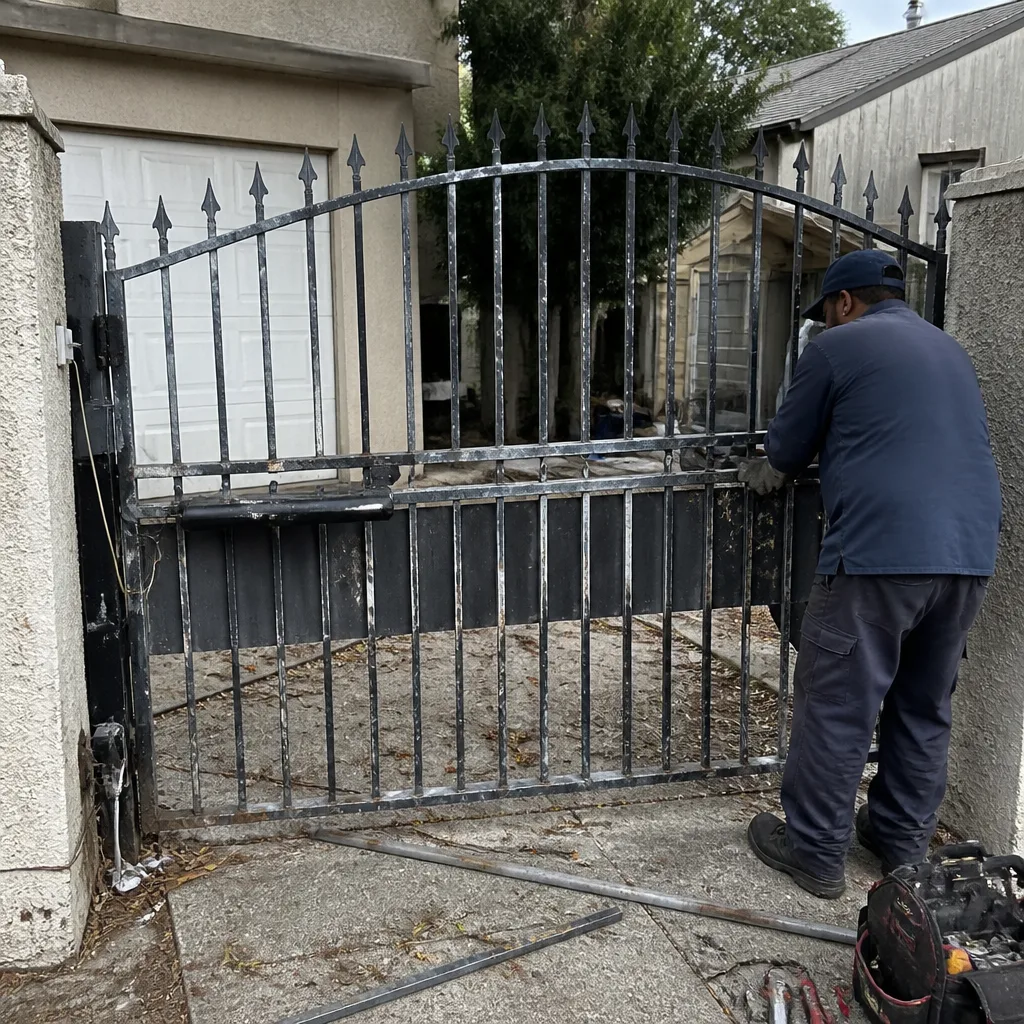 Before
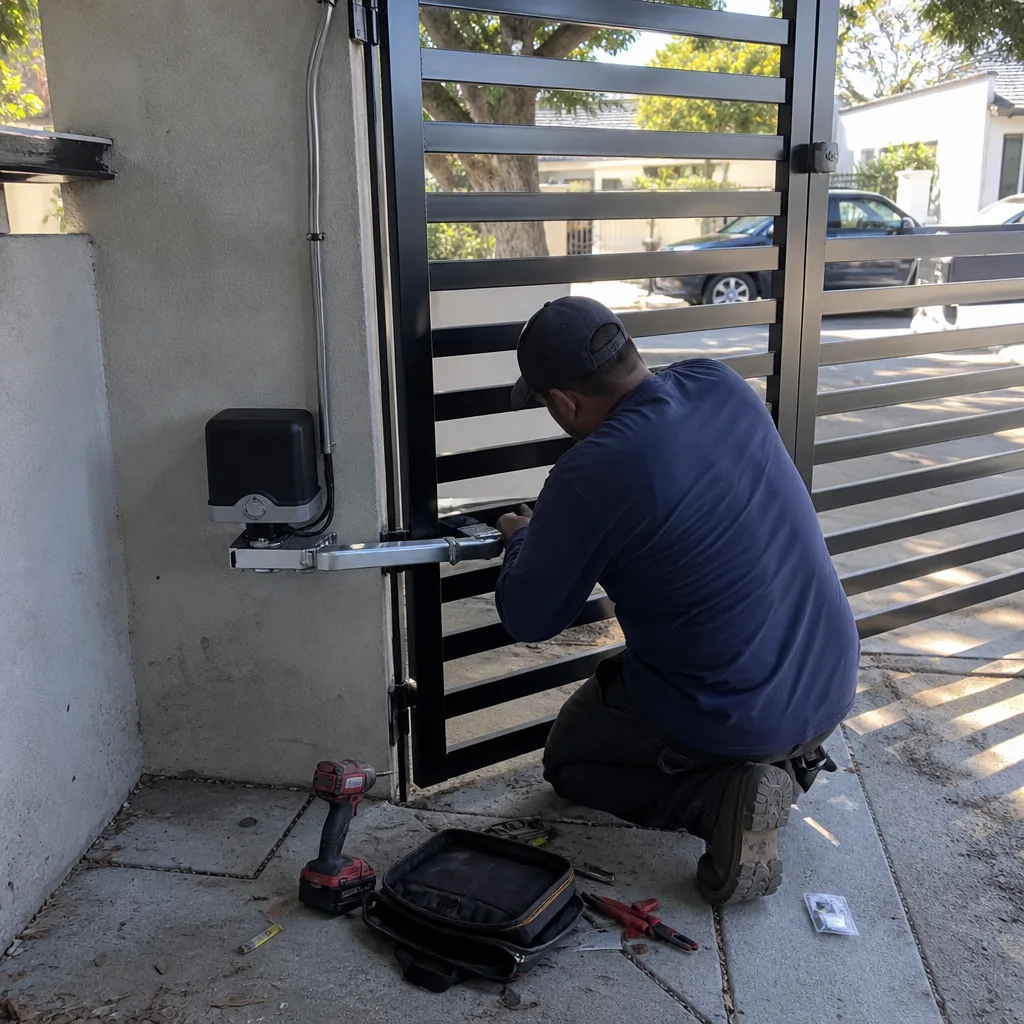 After
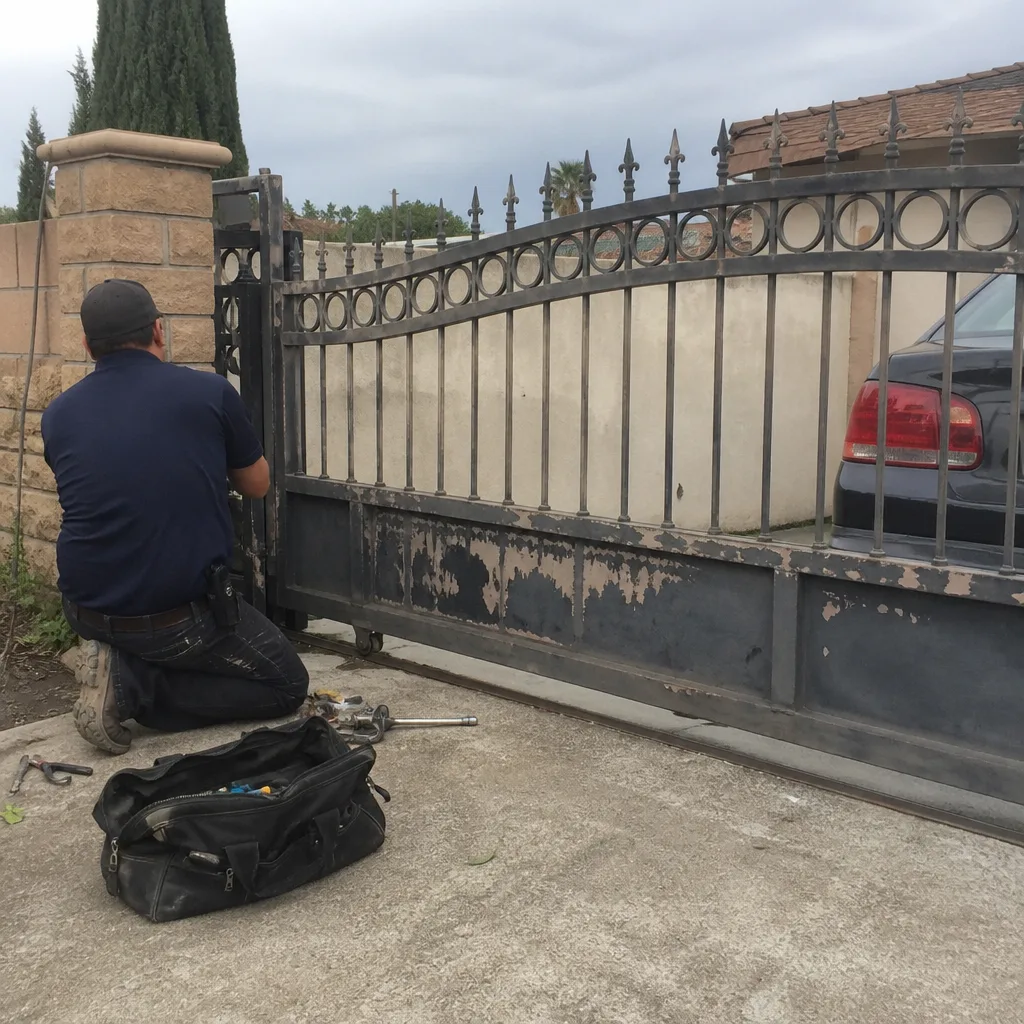 Before
 After
 Before
 After
When to Call a Professional
If any of the call-today signs appear – crash impact, weld cracking, refusal to close, or burning smell – cutting power and calling immediately is the only safe move. The same applies to any safety feature test that fails. But you don’t need an emergency to justify a professional visit; the two-to-four-week warning signs in this guide are meant to be acted on before they convert. A gate that’s grinding, slowing, or blinking a diagnostic code is telling you something, and a trained gate technician reads that language in minutes, not hours. Gate Repair Lake View Terrace offers free estimates in Lake View Terrace – call (833) 696-4511 and tell us what your gate is doing, or text a photo of your control panel’s diagnostic display, and we’ll tell you whether it’s urgent before we even book the visit.
Frequently Asked Questions
Most gate repairs in Lake View Terrace fall between $180 and $650 depending on the component. A limit switch adjustment or loop detector calibration runs $150 to $250. A start capacitor replacement on a LiftMaster or Viking operator typically runs $180 to $300. A gearbox or motor replacement on a hydraulic FAAC or BFT unit runs $500 to $900. A full operator replacement for a heavy slide gate can reach $1,800 to $3,000 including parts and labor. Every repair gets a written price agreed before any work starts. Call (833) 696-4511 for an exact quote – estimates are free.
Yes. We handle same-day service and fast dispatch from 7am to 7pm in Lake View Terrace for situations like a gate that won’t close and secure, a gate that has crashed against a stop, or a burning smell from the operator. Call (833) 696-4511 and we’ll dispatch to your location as soon as we can reach you.
A full gate installation includes site measurement, gate leaf or panel fabrication to match your existing posts or a new post set, operator selection and mounting, control board wiring, loop detector installation in the driveway, and safety device configuration like photo eyes and contact edges. The written quote covers all of these line items separately so you see exactly what you’re paying for. Call (833) 696-4511 and we’ll schedule a free measure.
A Mighty Mule that beeps but doesn’t move is usually reporting a low battery, a low voltage condition at the board, or a motor/gearbox issue depending on the beep pattern. The pattern itself is a diagnostic code, and reading it correctly tells us which subsystem is in trouble. Mighty Mule systems are repairable in most cases without replacing the entire operator. Call (833) 696-4511 with the beep pattern and we’ll translate it over the phone.
We work on both. Our technical range covers residential-grade systems like Ghost Controls and Mighty Mule through commercial and industrial-grade operators like FAAC, BFT, and DoorKing. That means a homeowner’s driveway gate and a property manager’s access-controlled slide gate are both within our service range. One call covers it.
Most residential gate operators last eight to twelve years in Lake View Terrace before they need a major component like a motor, gearbox, or control board, given proper maintenance. The dominant shortening factors here are heat exposure and soil-driven post shift. A well-installed operator mounted away from direct sun and on stable posts tends to hit the top end of that range; a sun-baked unit on shifting posts tends to hit the bottom. Annual inspection can extend effective life by catching wear items before they cascade.
The Bottom Line
A gate speaks before it fails. The grinding, clicking, whining, and hesitation are not quirks – they’re the warning language of mechanical and electrical systems that have time left if you act. Most failures give Lake View Terrace homeowners 30 to 90 days of notice before they become the kind of emergency that leaves the driveway gate open at night or jammed shut on a Monday morning. The monthly walk-through described in this guide takes ten minutes and catches almost everything worth catching. When you do hear or see something, you know exactly what questions to ask, what to check, and when to call a gate specialist instead of guessing.
Written by the team at Gate Repair Lake View Terrace, serving Lake View Terrace since 2012.