
Last updated November 2, 2026
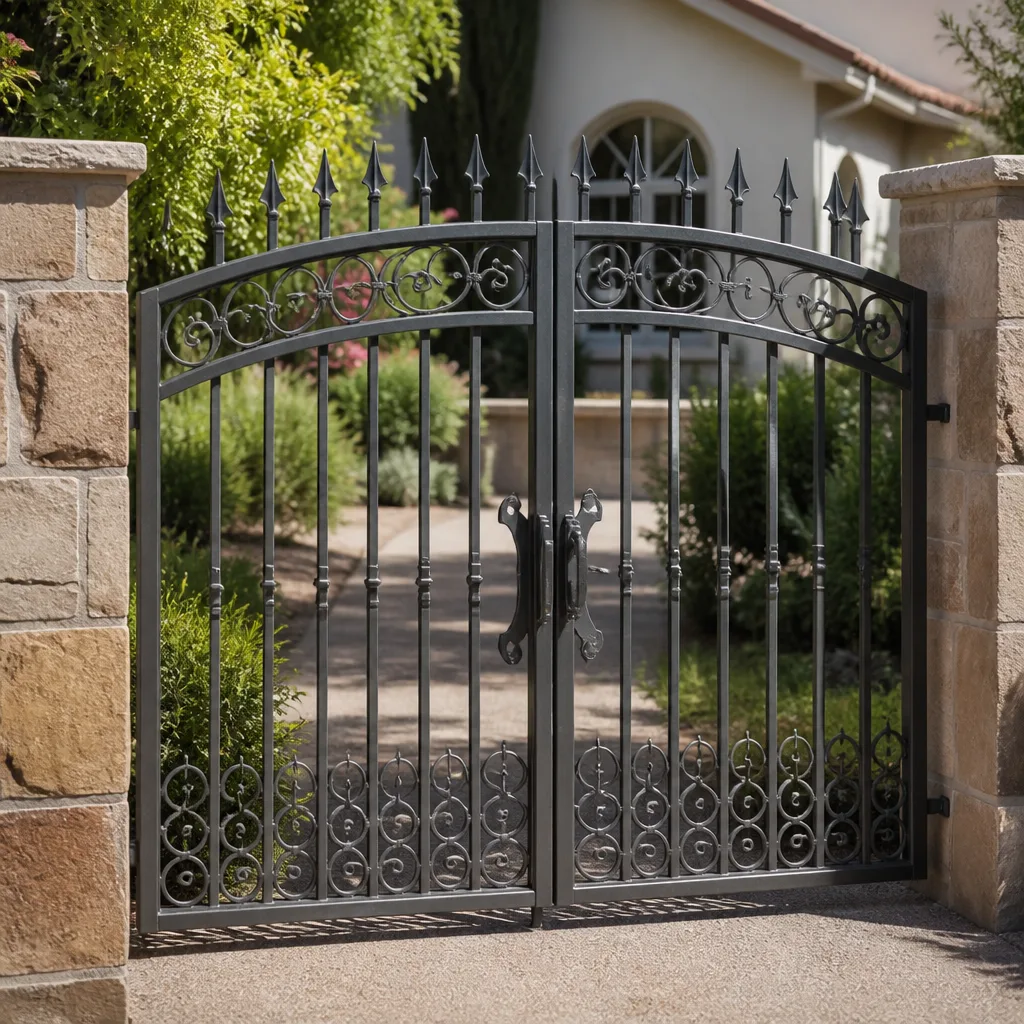 Wrought iron
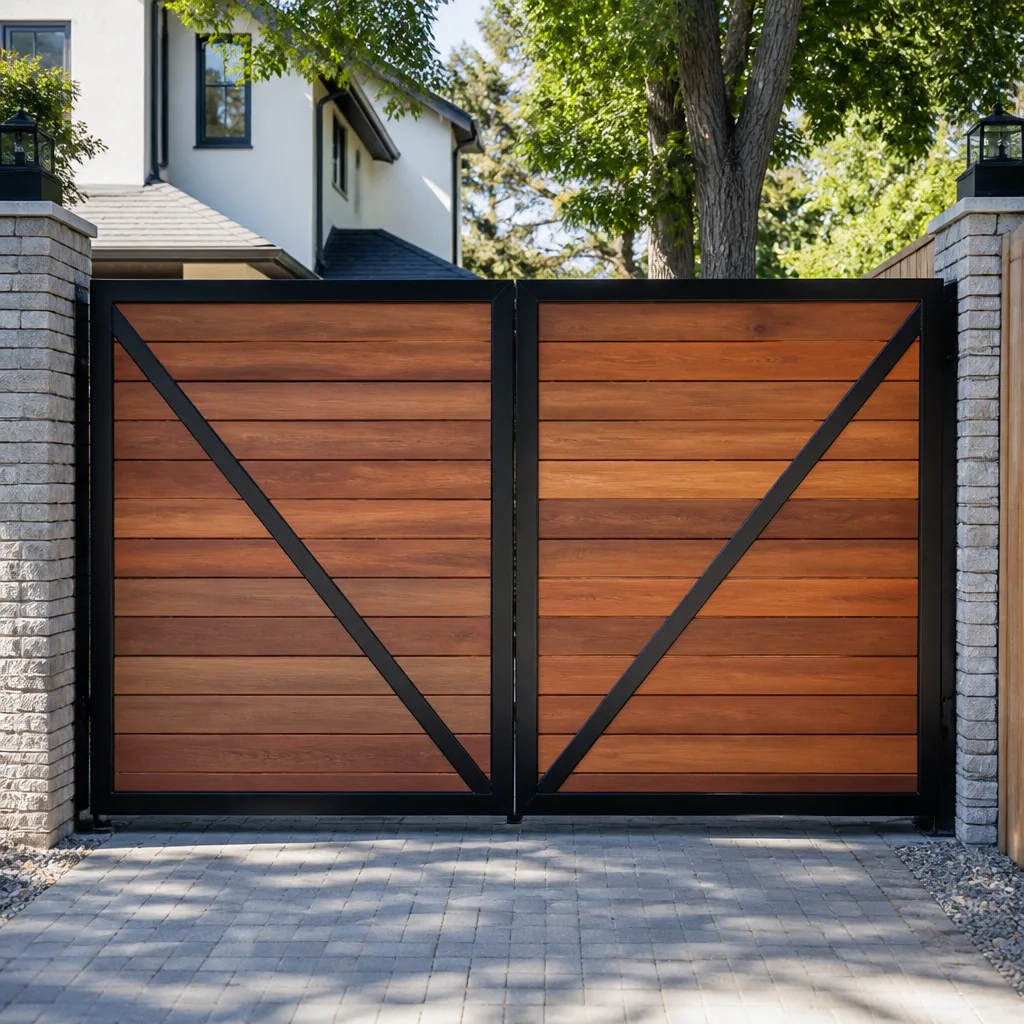 Wood & steel frame
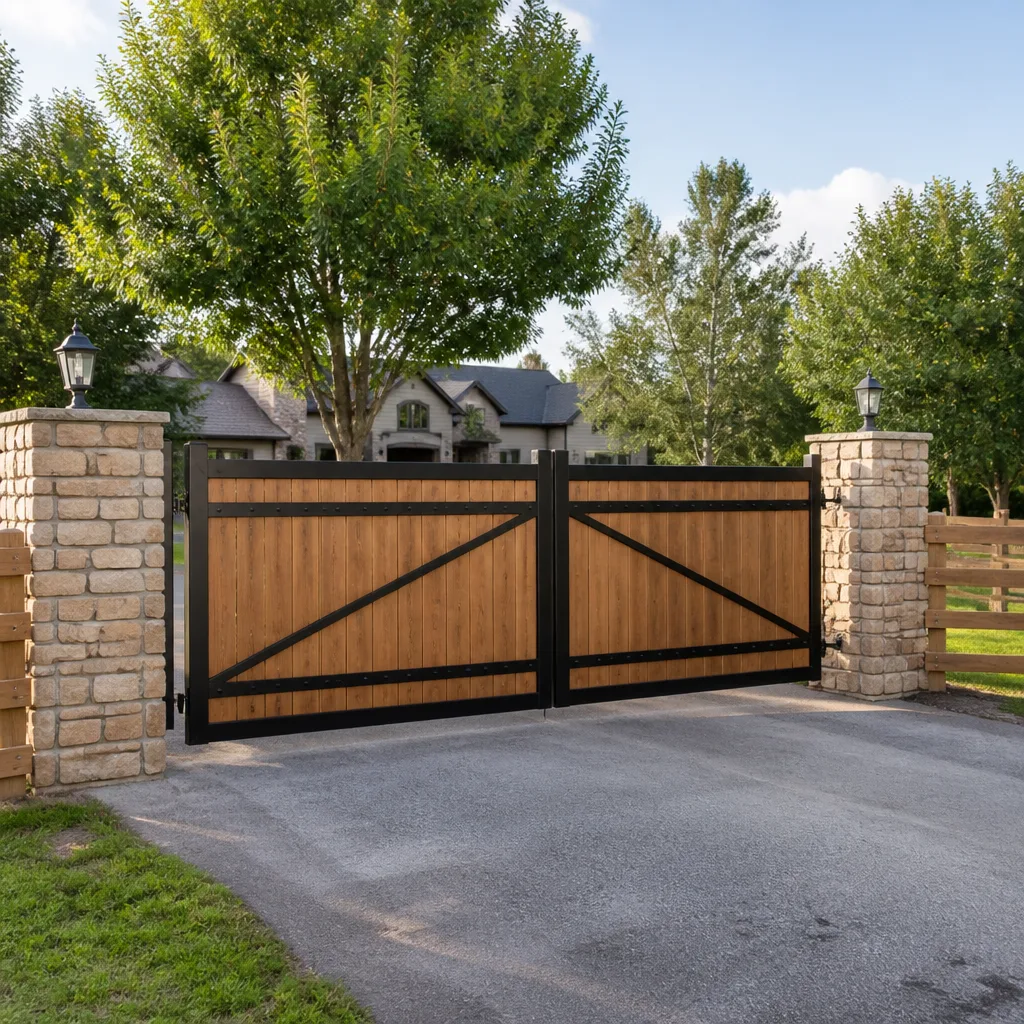 Farm & ranch
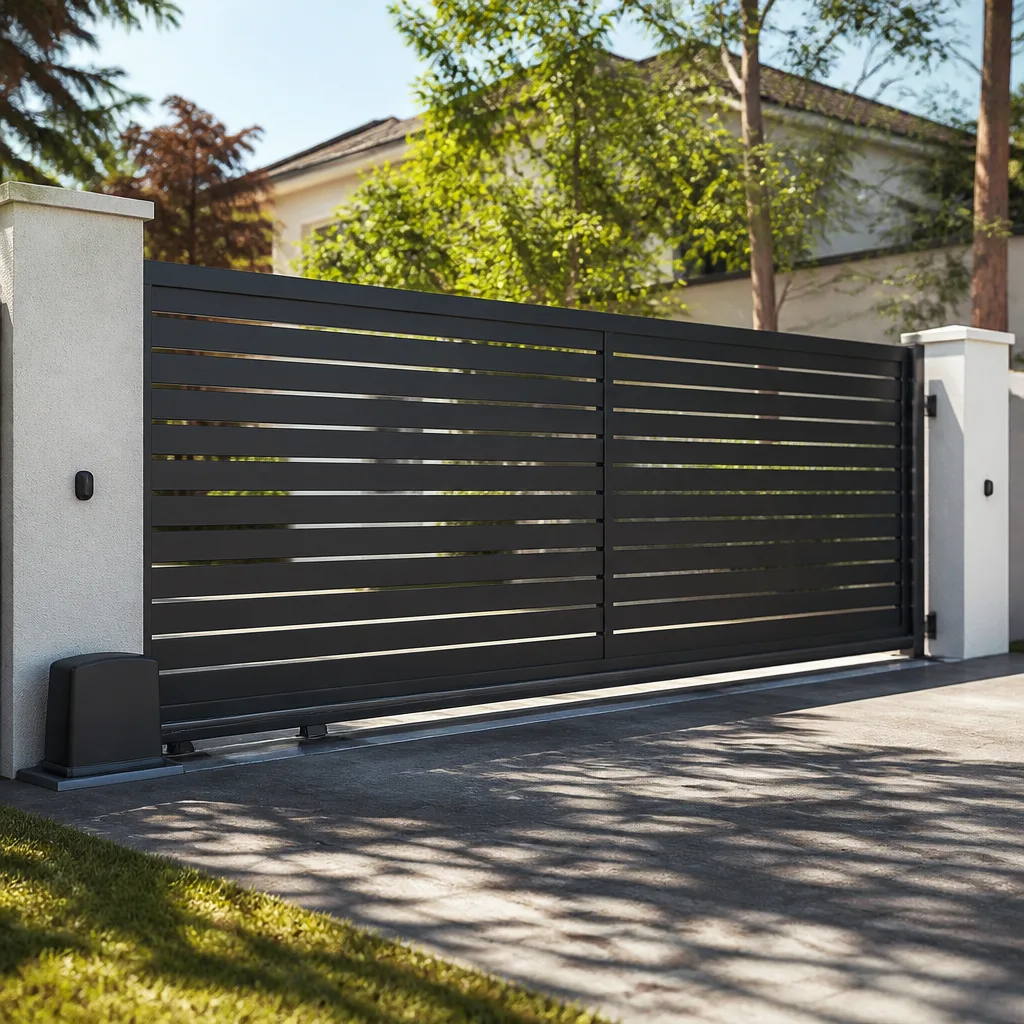 Sliding driveway gates
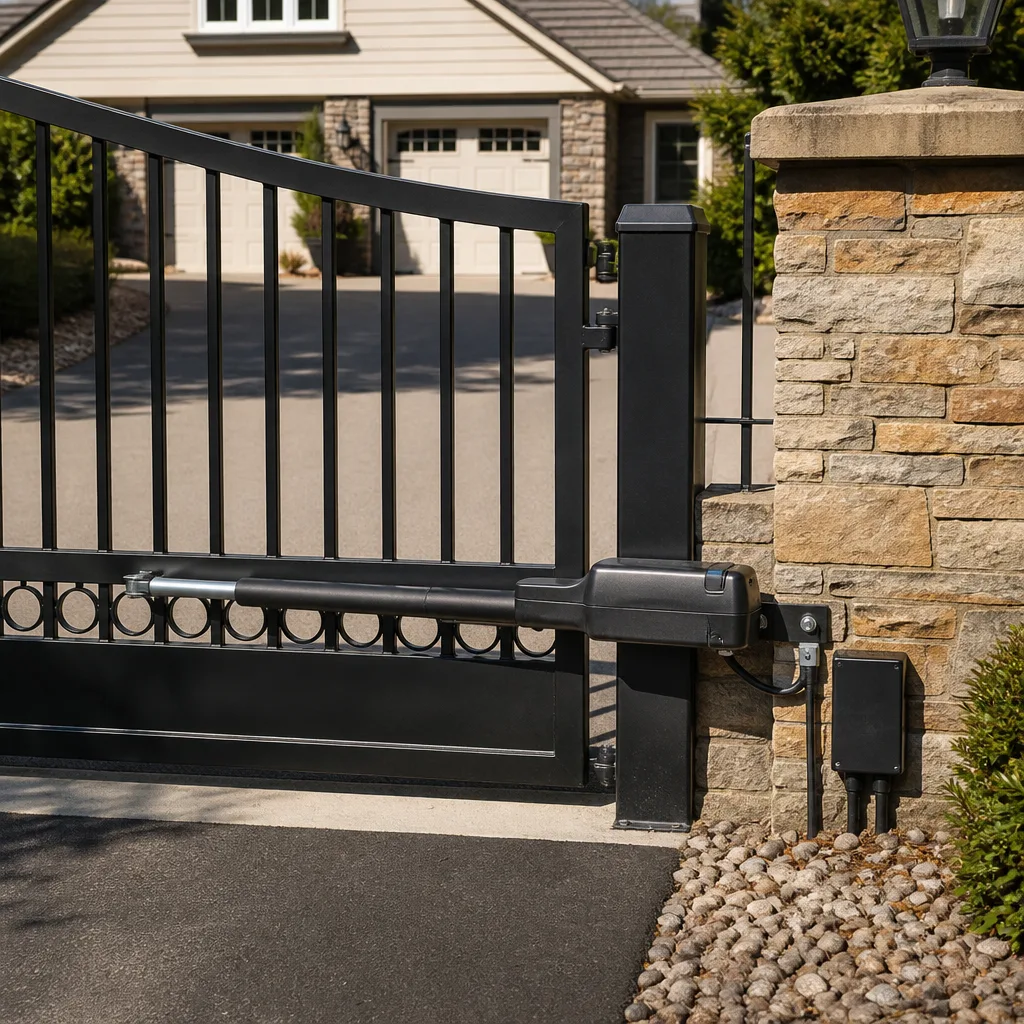 LiftMaster operators
Free on-site gate assessment - hinges, posts, and your LiftMaster or Nice gate operator checked before anything is quoted
The assessment is free and the quote is the invoice.
Get your free estimateSeasonal Gate Repair Care for Lake View Terrace: Year-Round Homeowner’s Guide
Here’s something most gate maintenance advice gets wrong about Lake View Terrace: the damage doesn’t happen during the weather event. It happens in the weeks after. We’ve pulled into driveways in July and found operator housings warped from June heat that seemed “fine” at the time. We’ve opened control boxes in April and found corrosion bloom from a rain that fell in February. Lake View Terrace doesn’t have four seasons in the traditional sense. It has four stress cycles: a dry heat cycle, a Santa Ana wind season, a brief wet period, and a post-rain corrosion window. Each one attacks your gate differently, and each one demands a specific response. Our Complete Gate Repair Guide for Lake View Terrace Homeowners walks through all four, month by month, so you’re maintaining your gate for the climate you actually live in, not the one generic seasonal checklists assume.
Quick Answer
Seasonal gate care in Lake View Terrace should follow four local climate events, not calendar quarters: pre-Santa Ana wind prep in September and October, summer heat protocol from June through August, post-rain inspection within two weeks of significant rainfall, and a dry-season lubrication cycle that runs from April through November. Most gate failures we see are preventable with these targeted checks, especially around battery performance, operator debris intrusion, and hardware corrosion.
Styles & brands we work with
- Wrought iron
- Wood & steel frame
- Farm & ranch
- Sliding driveway gates
- LiftMaster operators
Table of Contents
- Pre-Santa Ana Prep: Wind Load, Gate Stops, and Debris Protection
- Summer Heat Protocol: Battery Performance and Thermal Shutdown
- Post-Rain Inspection: Welds, Hardware, and Grounding
- Dry-Season Lubrication: Why Evaporation Rates Change Your Schedule
- How to Calendar These Tasks to Local Climate Events
- Brand-Specific Seasonal Notes for LiftMaster, FAAC, BFT, and Linear
- Common Mistakes to Avoid
- When to Call a Professional
Pre-Santa Ana Prep: Wind Load, Gate Stops, and Debris Protection
Santa Ana winds in Lake View Terrace aren’t a hypothetical. They’re a predictable fall event that pushes sustained winds through the canyons, and every year we see gates that weren’t ready for them. The problem isn’t just the wind pushing against the gate leaf. It’s the repeated gusting that hammers the gate against its stops, loosens hinge bolts, and drives fine dust into operator housings, limit switches, and control boards.
Start your Santa Ana prep in late September, before the first major wind event. Walk the gate through a full open-close cycle and listen. A gate that slams into its open or closed stop is a gate that’s already losing hardware. Tighten hinge bolts and check the gate stops themselves. Rubber stops degrade, crack, and fall off, and once they’re gone, metal hits metal every cycle. That shock load travels through the gate leaf into the operator, and it’s a common cause of premature gear wear in swing operators and chain stretch in slide operators.
Here’s a pre-Santa Ana checklist we use:
- Check gate stops on both open and closed positions. Replace cracked or missing rubber stops before wind season.
- Tighten all hinge bolts, bracket bolts, and operator mounting hardware. Vibration loosens these faster than you’d expect.
- Inspect the operator housing for gaps around the cover. Dust intrusion is the leading cause of limit switch failure during wind events.
- Clear debris from the gate track if you have a slide gate. Wind drives leaves, twigs, and gravel into tracks and rollers.
- Trim overhanging branches near the gate path. A wind-broken branch on a gate arm is a service call waiting to happen.
Wind load rating matters more than most homeowners realize. A solid panel gate catches wind like a sail, and if the operator isn’t rated for that surface area, the motor works against a load it was never designed to handle. Our Gate Repair services cover LiftMaster, FAAC, BFT, and Linear operators, and each brand specs wind load limits differently. During Santa Ana season, a properly rated and maintained operator handles gusts without strain. An under-rated one overheats, strips gears, or burns out a capacitor. That’s not a maintenance failure. That’s an installation mismatch, and it’s worth knowing before the winds arrive.
Summer Heat Protocol: Battery Performance and Thermal Shutdown
Lake View Terrace summer temperatures routinely cross 95°F, and that’s the threshold where battery performance in gate operators starts to degrade sharply. Lead-acid backup batteries lose capacity as temperature rises. At sustained temperatures above 95°F, a battery that would normally hold a charge for 24 hours might only hold enough for a few cycles. If your gate relies on battery backup during a power outage, summer is when you find out the battery isn’t actually there when you need it.
Here’s the practical protocol: test your gate’s battery backup in early June, before the hottest weeks arrive. Disconnect power to the operator and run the gate through several cycles on battery alone. If it slows noticeably by the third or fourth cycle, or if it struggles at all, replace the battery. Batteries in Lake View Terrace typically last two to three years because heat shortens their life. If you can’t remember the last time the battery was replaced, it’s overdue.
Thermal shutdown is the other summer problem. Operators have internal thermal protection that cuts power when the motor gets too hot. It’s a safety feature, not a defect, but it’s also a sign the motor is working harder than it should. We see thermal shutdowns most often on gates that need lubrication, gates with binding hinges, or operators that were sized incorrectly for the gate’s weight and length. If your gate stops working in the afternoon heat and starts again after cooling down, that’s thermal protection cycling. It’s telling you something.
- Test battery backup in early June. Replace batteries older than three years.
- Lubricate hinges and rollers before summer heat adds friction and load.
- Shade the operator if it’s in direct afternoon sun. A simple shade cover can drop internal temperatures 15-20°F.
- Listen for slower-than-normal operation during heat waves. That’s early strain, and it’s cheaper to address before shutdown occurs.
Post-Rain Inspection: Welds, Hardware, and Grounding
The first two weeks after significant rainfall in Lake View Terrace are the highest-risk window for hidden gate damage. Not during the rain. After it. Here’s why: water sits in weld joints, bolt holes, and operator housings, and drying is when oxidation accelerates. The water evaporates, leaving behind mineral deposits and creating the oxygen-rich environment rust needs. If you wait a month to inspect, you’ll find corrosion that started the day the rain stopped.
Start with welds. Look for hairline cracks, especially at stress points where the gate leaf meets the hinge brackets and where the operator arm attaches. Rain doesn’t cause these cracks, but water seeps into existing micro-cracks and accelerates rust expansion, which widens them. A weld that was structurally sound in January can be visibly cracked by March if water got in and sat.
Hardware is next. Check every exposed bolt, nut, and bracket for surface rust. Surface rust on hardware is normal and usually cosmetic, but rust at threaded connections is a problem because it seizes fasteners. A seized bolt on a hinge bracket turns a simple adjustment into a cut-and-replace job. If you catch surface rust early, a wire brush and a rust-inhibiting treatment handle it. If you wait until the threads are locked, you’re looking at a repair call.
Grounding is the one most homeowners miss. Electric gate operators depend on a proper ground connection for safety loops, keypads, and the control board. Rain softens soil, which can shift ground rods and loosen connections. If your gate starts behaving erratically after a storm, intermittent opening, keypad codes not registering, loop detector false triggers, check the grounding before anything else. We’ve diagnosed more control board replacements than we care to count where the actual problem was a ground wire that corroded loose at the rod.
For a full breakdown of what post-rain damage looks like on electric gate systems, see our Electric Gate Repair in Lake View Terrace page.
Dry-Season Lubrication: Why Evaporation Rates Change Your Schedule
Lubrication advice for gates usually says “lubricate every six months” or “twice a year.” That’s fine for coastal properties where humid air keeps lubricant from evaporating. Lake View Terrace is not coastal. The San Fernando Valley area sees dry heat for eight to nine months of the year, and that dryness pulls moisture out of lubricants faster than standard schedules account for. What works on a coastal gate every six months needs to happen every three to four months here.
Here’s the practical difference. A lithium-based grease applied to hinge pins in October will still be doing its job in March if the gate is in Santa Monica. In Lake View Terrace, that same grease is often dry and flaking by January because the air itself is pulling moisture out of it. Dry lubricant doesn’t lubricate. It cakes, collects dust, and becomes an abrasive paste that accelerates wear on hinge pins and roller bearings.
The dry-season lubrication cycle we recommend runs from April through November, with applications every three months. That means April, July, and October. Between November and March, you can stretch to a single application after the rainy season ends and things dry out, usually late February or early March.
Use a lubricant designed for the purpose. Silicone spray works for plastic rollers and nylon bushings. White lithium grease handles metal hinge pins. Never use WD-40 as a lubricant. It’s a solvent, not a long-term lubricant, and it actually strips existing grease while evaporating quickly. In Lake View Terrace’s dry air, WD-40 on a hinge pin is gone within a week, and the hinge is worse off than before.
How to Calendar These Tasks to Local Climate Events
Generic seasonal checklists tell you to do the same tasks four times a year. The problem is your gate doesn’t care about solstices and equinoxes. It cares about Santa Ana winds, heat waves, rain, and dry air. Calendar your maintenance to the events that actually stress the equipment.
Here’s the year-round calendar we recommend for Lake View Terrace gates:
- January – February: Post-rain inspection window. Focus on welds, hardware rust, and grounding issues after winter rainfall. This is the highest-priority inspection of the year.
- March: One lubrication application after the rainy season ends and the air dries out. Check battery health as temperatures begin climbing.
- April – May: Second lubrication application. Inspect operator housings for dust intrusion as dry-season winds pick up.
- June – August: Summer heat protocol. Test battery backup performance monthly during peak heat. Watch for thermal shutdown cycles. Third lubrication application in July.
- September: Pre-Santa Ana prep begins. Tight all hardware, check gate stops, clear tracks, and trim branches. This is your wind-season defense.
- October: Fourth lubrication application. Final wind-season check before Santa Ana winds peak.
- November – December: Light monitoring. Watch for early rain and the first signs of water intrusion. Test loop detectors before wet weather affects ground conductivity.
If you do nothing else, do the post-rain inspection and the pre-Santa Ana prep. Those two windows catch the majority of failures we see in Lake View Terrace, and both take less than an hour with a basic tool kit.
Brand-Specific Seasonal Notes for LiftMaster, FAAC, BFT, and Linear
Not all gate operators handle Lake View Terrace’s climate the same way. We work across nine major brands, and we see distinct seasonal patterns depending on the equipment. Here’s what to watch for with four of the most common operators in this area.
LiftMaster
LiftMaster operators are workhorses, but their SW-series swing operators have capacitors that don’t love prolonged heat. We see capacitor failure spike in August and September after extended 95°F+ stretches. The failure is sudden, the gate stops mid-travel, and the capacitor is visibly swollen when we open the housing. If you have a LiftMaster swing operator over five years old, have the capacitor checked before summer peaks. It’s a ten-minute replacement versus a full operator repair.
FAAC
FAAC operators are hydraulic, which means heat affects them differently. Hydraulic fluid thickens in cooler temperatures and thins in heat, and FAAC systems need their fluid level and condition monitored through summer. If the fluid looks dark or smells burnt after a hot stretch, it’s oxidizing from heat and needs changing. FAAC units also have pressure relief valves that can drift in extreme temperature swings, which changes how forcefully the gate opens and closes. If your FAAC gate starts drifting past its stops in summer, that’s a pressure valve adjustment, not a stop position problem.
BFT
BFT operators are common on commercial and multi-family gates in Lake View Terrace, and their control boards are sensitive to dust. Santa Ana season is when we see BFT boards fail from conductive dust settling on circuit traces. The failure is often intermittent at first, gate stops mid-cycle, resets itself, works fine for a week, then repeats. If your BFT gate starts acting up during windy weeks, have the control board inspected and blown out before the dust causes permanent damage.
Linear
Linear operators, especially the LRA swing and LSS slide models, are popular on residential gates throughout the San Fernando Valley. Their limit switches are mechanical, and debris intrusion is the seasonal weak point. Wind-driven grit works into the switch contacts, which causes the gate to stop short or travel past its limits. Linear operators benefit more than most from a housing seal check before Santa Ana season and a post-rain inspection of the limit switch wiring.
If you’re running a different brand, the seasonal stress points still apply. The failure mechanisms vary, but the climate stressors don’t. Heat, wind-driven dust, rain, and dry air affect every operator on the market. If you want someone who recognizes your specific hardware on the first visit, see Gate Repair in Lake View Terrace for what we cover.
Common Mistakes to Avoid
- Lubricating on a fixed six-month schedule. Lake View Terrace’s dry air evaporates lubricant faster than standard schedules account for. Stretch a six-month interval here and you’re running dry for months at a time. Use the three-month cycle from April through November.
- Waiting until after Santa Ana winds to inspect the gate. Pre-wind prep catches loose bolts and degraded stops before they fail. Post-wind inspection just tells you what already broke. Do the prep in September, not the repair call in November.
- Assuming a backup battery is fine because the gate works during normal operation. Backup batteries fail silently. You only discover the problem during a power outage. Test battery performance before summer heat, not after it starts.
- Ignoring thermal shutdown as a one-time fluke. A gate that stops in the afternoon heat and works again at night is telling you something specific: the motor is overloaded, under-lubricated, or improperly sized. It will keep happening until the cause is addressed.
- Using WD-40 as a hinge lubricant. It strips existing grease and evaporates quickly. In Lake View Terrace’s dry air, WD-40 on a hinge pin is gone within days, leaving the metal with less protection than before.
- Skipping the post-rain inspection because “the gate worked fine during the storm.” Corrosion accelerates during drying, not during the rain itself. The two-week window after rainfall is when damage becomes visible. Skip that window and you’ll catch the damage much later, when it’s more expensive to fix.
- Treating a drift or erratic behavior as a mechanical problem without checking grounding first. Post-rain soil shifts loosen ground connections, which causes intermittent electrical behavior. The fix is a tightened ground wire, not a new control board. Check the cheap thing first.
When to Call a Professional
Some seasonal issues are DIY-friendly: tightening bolts, clearing track debris, visual inspections, battery tests. Others are not. If your gate is showing thermal shutdown cycles, erratic operation that comes and goes, or visible weld cracks, that’s not a maintenance checklist situation. That’s a diagnostic job. Electric gate systems have high-tension springs, moving mechanical parts under load, and control boards carrying live voltage. A gate leaf weighs hundreds of pounds, and when it moves without you expecting it to, the consequences are serious. If you’re not sure what you’re looking at, don’t guess. Gate Repair Lake View Terrace offers free estimates in Lake View Terrace. Call (833) 696-4511 and one of our gate technicians will diagnose the issue and give you a written price before any work starts.
See the difference
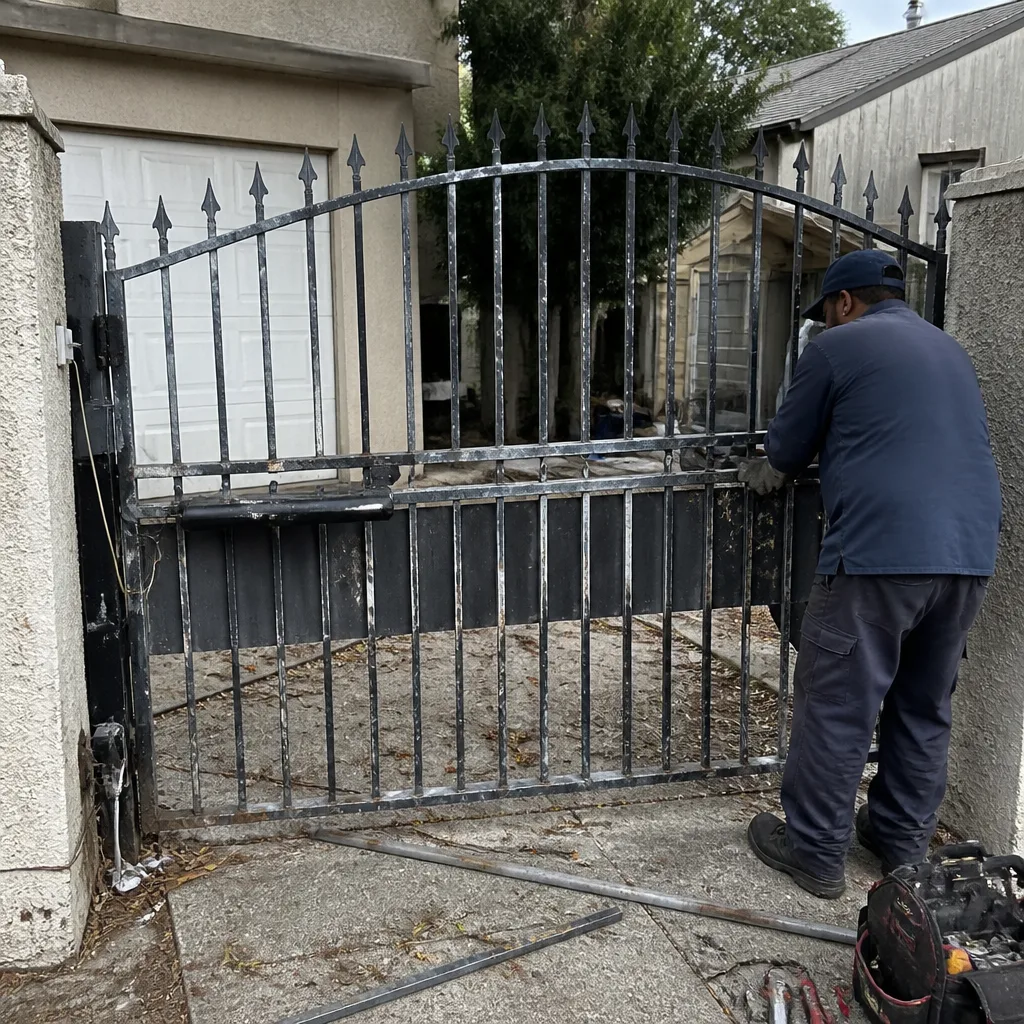 Before
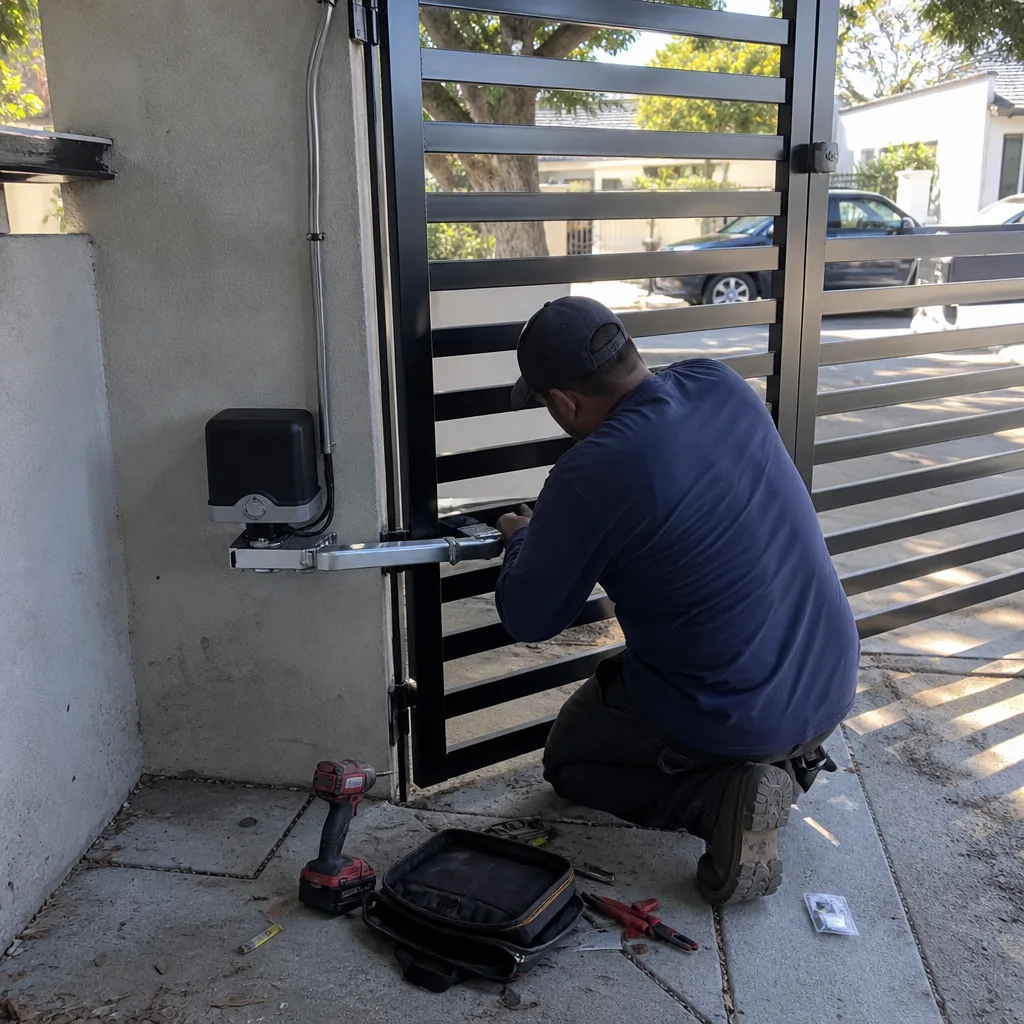 After
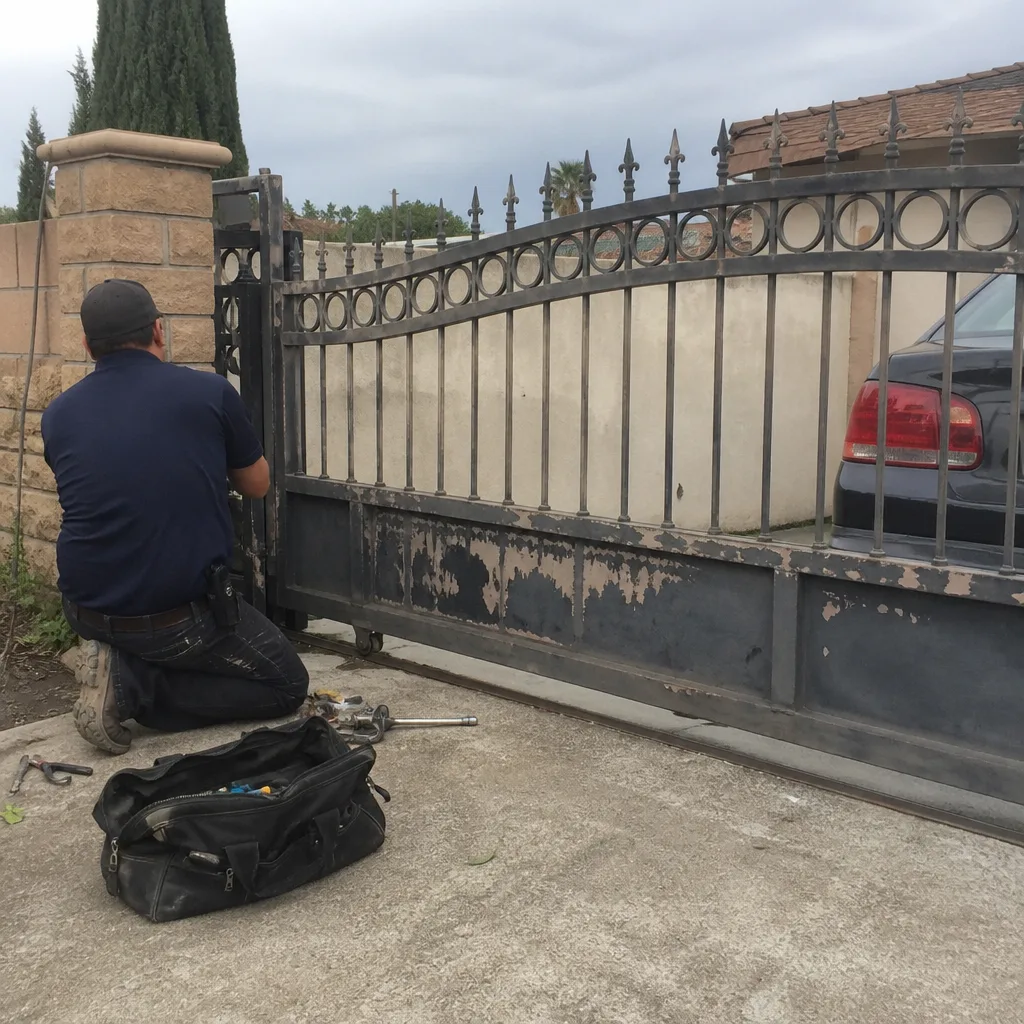 Before
 After
 Before
 After
Frequently Asked Questions
Every three months during the dry season, which runs from April through November. Lake View Terrace’s low humidity evaporates lubricant faster than coastal areas, so the standard six-month interval leaves your hinge pins and rollers running dry for months. Apply in April, July, and October, then once after the rainy season ends in late February or March.
Test the battery in early June, before summer heat peaks. If the battery is older than three years, or if the gate struggles through more than a few cycles on battery power alone, replace it. Temperatures above 95°F degrade lead-acid batteries quickly, and Lake View Terrace summers routinely exceed that threshold.
Yes, and the damage comes from two directions. Gusting wind hammers the gate leaf against its stops, which loosens mounting hardware and causes shock loads that wear out gears and chains. Fine dust driven by the same winds works into operator housings, limit switches, and control boards, causing failures that often show up weeks later as intermittent problems.
Within two weeks. The critical window is after the rain stops, not during the storm. Water sitting in weld joints and bolt holes creates the oxygen-rich environment rust needs, and the drying period is when oxidation accelerates. A two-week inspection catches surface rust and moisture intrusion before they become structural problems or electrical failures.
Yes. LiftMaster swing operators typically show capacitor failures after extended heat, FAAC hydraulic systems need fluid monitoring through summer, BFT control boards are sensitive to Santa Ana dust intrusion, and Linear limit switches collect debris in windy conditions. Understanding your specific brand’s seasonal weak points means checking the right things at the right time. We service LiftMaster, FAAC, BFT, and Linear, along with five other major brands.
Most of the basic seasonal checks are DIY-friendly: lubricating hinges, tightening bolts, clearing track debris, testing battery function, and visual inspections of welds and hardware. What’s not DIY-friendly is anything involving operator internals, control board diagnostics, weld repair, or electrical grounding issues. Those systems carry live voltage and moving mechanical loads that can cause serious injury. For anything beyond basic maintenance, explore our more guides & resources or call a gate specialist who can diagnose and fix the issue safely.
If your gate needs more than seasonal maintenance, our Gate Installation in Lake View Terrace page covers replacement options, and our Gate Repair Lake View Terrace home page has the full scope of what we handle.
The Bottom Line
Your gate lives in Lake View Terrace’s actual climate, not a generic four-season calendar. Pre-Santa Ana prep in September, summer heat protocol from June through August, post-rain inspection within two weeks of storms, and a three-month lubrication cycle from April through November cover the failure points that standard maintenance guides miss. The gate’s operator brand matters too, LiftMaster, FAAC, BFT, and Linear systems each have distinct seasonal failure patterns worth knowing. If you only remember two things: catch corrosion in the two-week post-rain window, and test battery backup before summer heat arrives. Those two catches prevent the majority of emergency repairs we see. For anything beyond your comfort level, call (833) 696-4511 for a free estimate.
Written by the team at Gate Repair Lake View Terrace, serving Lake View Terrace since 2012.